By Ooi Kee Beng
This article first appeared in Forum, The Edge Malaysia Weekly on August 21, 2023 – August 27, 2023
Seldom had state elections seemed so important to the future of the country as the six that took place on Aug 12, 2023, nine months after federal elections put Datuk Seri Anwar Ibrahim in power. The results were not very surprising — all states remained with the incumbent coalitions. But what they hopefully signify is the end of a protracted period of political elections and uncertainty in the country.
A system-altering pandemic, a regional shift in strategic tension, a parliamentary coup, an emergency declared and four changes of government at the federal level in five years ended with a titular unity government in place, properly supported in nine of the 13 states. One has to say that Malaysia has landed on its feet.
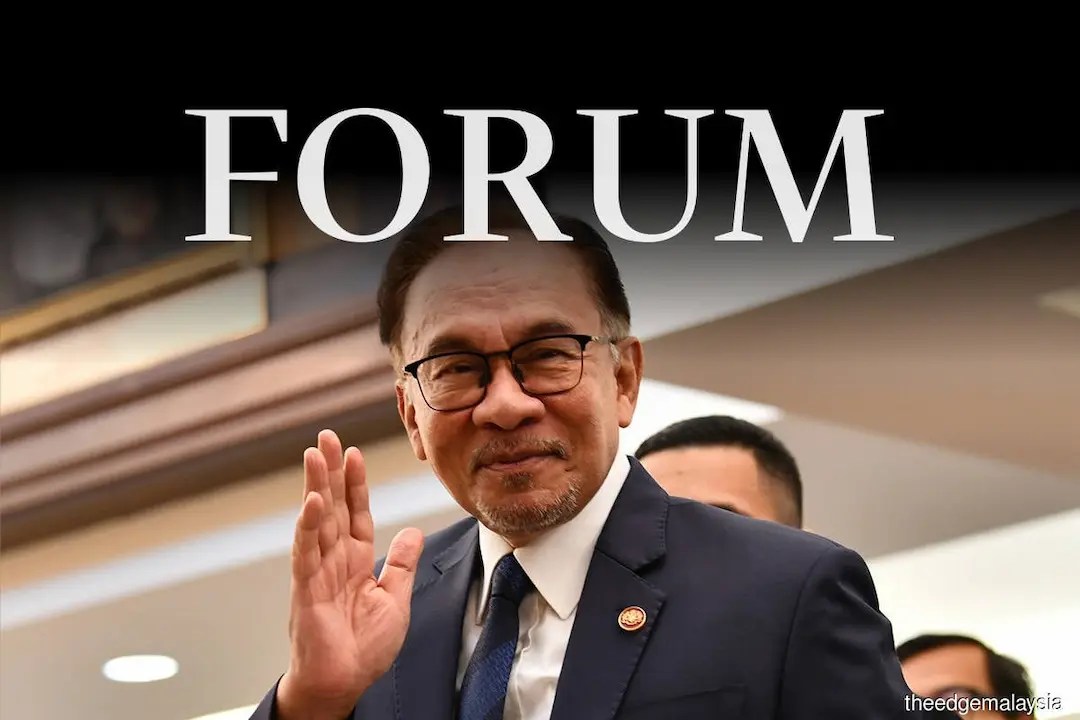
In 1998, Anwar was knocked off his steady trajectory towards becoming prime minister, but exactly 25 years later, he now stands tall at the head of a coalition of coalitions discursively committed to good governance, inclusiveness and economic development.
Sabahans and Sarawakians now finally feel more recognised as political equals and the non-Malays are no longer easily dismissed as demographic anomalies — in fact, their solid support of Anwar’s leadership has been the key to his comeback, and his unity government survived its first big challenge, namely the six state elections of Aug 12. While it may seem that the Islamist-centred opposition remains strong, they control but four of 13 states, and it is far from certain that Perikatan Nasional, not having federal incumbency, will be able to maintain order in its ranks.
One queer phenomenon that needs pointing out is that in Malaysian politics, periods between elections are seldom considered the calm between storms during which proper governance can be carried out in peace. Instead, politicking tends to rage on as if the campaigning should never stop and as if every policy has to pass a public referendum. That is surely a warped understanding of democracy. Once elected, a government’s job is to govern well and to develop the nation and its society. Not win popularity contests until the next election.
This brings me to the main point I wish to discuss at this time, when so many new candidates have been elected into state assemblies — leadership.
As legendary American football coach Vince Lombardi once said, “Leaders are not born, they are made.” But are leaders made just by being elected? Certainly not. Being elected is merely the starting bang for learning to become a leader.
But a leader of what? While state assemblymen will be most concerned with provincial matters, Malaysia is now at a point when the energies from below have a good chance to sync with the direction for development chosen at the centre. In short, policymaking at state level has seldom been as significant to national policymaking as it is now.
This will be a big challenge for all the parties that constitute the unity government. Syncing state initiatives with federal initiatives, and vice versa, will certainly enhance their efficacy and impact.
Secondly, the mantra calling for change and even Malaysia Madani — the slogan chosen by Anwar in January to conjure a future where society is marked by civility and the economy is built on sustainability — fall short as guidance for effective policymaking and as inspiration for leadership.
What is needed, given the descent of Malaysian political discourse into bigotry and pugilism since 1998, is a refocusing by its leaders on nation-building itself, away from their partisan or selfish interests.
Nation-building is long term. Nation-building is state building. Nation-building is community building. And nation-building is national economy building, which demands modern education for all citizens, insights into the workings of the modern global economy, and the development of a synergistic and integrated economic ecosystem.
Missing ingredient
Thirdly, Malaysia is not a new country. It is 65 years old. It therefore has much history of serious nation-building for new leaders to learn from, through which to expel its colonial inheritance of governance through ethnic distrust, reverse the decay of its public services and mine the potential of its diverse population.
At present, Anwar has wisely chosen to honour one of the country’s founding fathers — Tun Dr Ismail Abdul Rahman, who died in 1973 while he was acting prime minister. Like for everybody else, leadership did not come naturally to Ismail, nor did he have a clear idea of what he was getting into when he joined Umno in the early 1950s. He had to learn both as part of the process of growing up, and on the job, as it were. He had to rise to the occasion in every case.
The times maketh the man, and Ismail rose in stature over 20 years as an effective leader whose main concern was the building of the country. Principled, decisive and loyal, he couldn’t, and wouldn’t, stand fools. Feared and respected in equal measure, this Johorean strove to be fair, especially when he was home affairs minister.
The decision by Anwar to honour this man and, in the process, make him a symbol for good Malay leadership and a good nation-builder adds a needed ingredient to Malaysia Madani, and not only anchors the concept to a clear example but also to a bygone period of promise and integrity.
Finally, leaders are able to lead because they are able to envisage goals bigger than themselves. Nation-building requires a discovery of such a vision by the new leaders that now take the stage in state assemblies throughout the country. If unity can be achieved between state and federal goals, then more can be accomplished in the coming years than is now conceivable.
Datuk Dr Ooi Kee Beng is the executive director of Penang Institute. He is the prizewinning author of The Reluctant Politician: Tun Dr Ismail and His Time (ISEAS, 2007). Homepage: wikibeng.com.

 Wikibeng
Discussion
No comments yet.