By Ooi Kee Beng, In Penang Monthly, October 2023
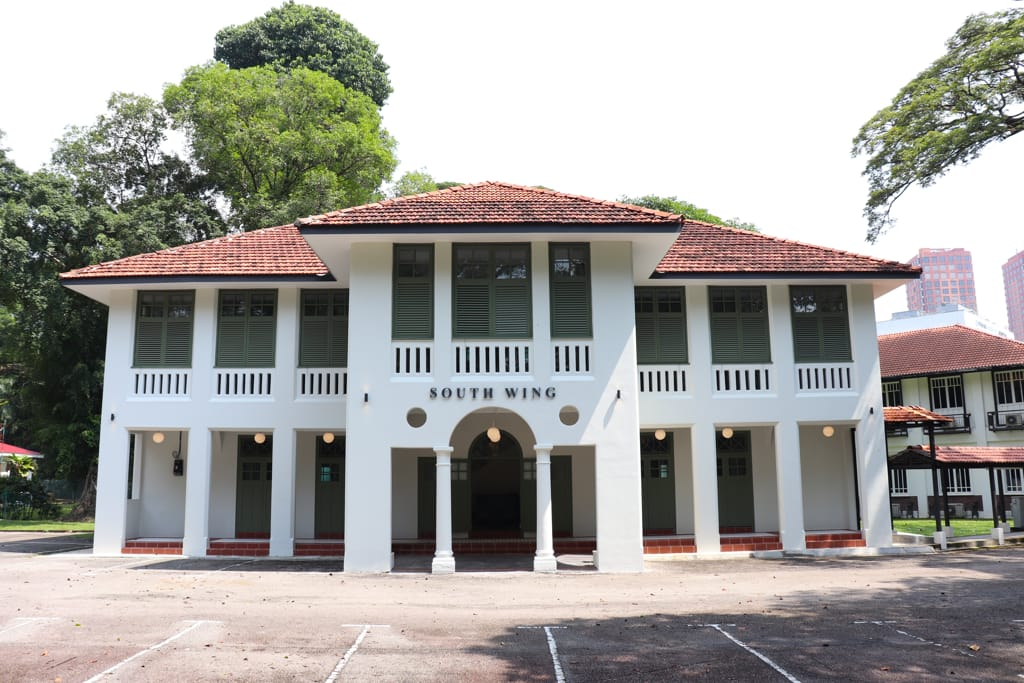
PENANG INSTITUTE is in the process of launching its Forum for Leadership And Governance (FLAG) Project. The venue for its series of initiatives will be the newly renovated South Wing building on its grounds at 10-12 Brown Road.
Why Are We Doing This?
Penang Institute’s main objectives since its founding as SERI in 1997 have been (1) to generate cutting-edge information on the socio-economic and environmental conditions affecting the State of Penang, (2) to supply the Penang State Government with policy suggestions based on the Institute’s growing understanding of the challenges facing the State and the Country, and (3) to enrich the standard of public discourses in Malaysia.
In its deep and long-term collaborations with government agencies and civil society organisations, with academicians and businesses, and with international organisations and research institutes across the region, the Institute has identified an urgent need for a platform in Penang for leadership development, where leading personalities and institutions can be brought together to identify problems and devise solutions that can convey benefits across sectors.
Bringing synergy to the public policy ecosystem in Penang is one of the end goals of this project. Using this platform, we intend to participate more directly with like-minded institutions across the region.
Progressive and Adaptive Leadership
Nothing is more conserving of systems than leadership styles gone stale. And by leadership, we do not mean only the highest level but also the lower levels as well.
Times change, and so should leadership styles and ideologies, not only leaders. In developing countries which, in recent decades, went from being a pre-modern economy or colonial polity to being nominally independent countries, the assumption that their leaders will somehow automatically discard feudal ideas of power and economics, and avoid acquiescent habits and colonial knowledge, is clearly wrong.
To highlight this neglected element in national independence and nation building, and to reiterate the end goals of Merdeka, which, we believe, centrally include the cultivation of confident and caring citizens who are knowledgeable about society and inquisitive about the world, the FLAG programme will connect with like-minded projects in the region and inspire discussions on Leadership as a Science and an Art, as an attitude welcoming of change and guided by articulated and progressive goals.
The case in Malaysia, over the last 60 to 70 years, has largely been about maintaining a sense of victimhood in the population. Feeling short-changed by history, by other communities, by nature or by politics, the disgruntled citizenry becomes fair game for demagogues. I exaggerate, but not much.
To work against that sad dynamic, and to make leadership a more common undertaking, the following are what we hope will constitute The FLAG:
1) Masterclasses
Providing a platform for experienced leaders from various fields to share their knowledge and skills, and for talented and ambitious young people to learn from them allows Penang Institute to ease the serious lack of concrete leadership training in Malaysian society.
Such masterclasses will provide networking possibilities for participants, and be a source of substantive revenue for Penang Institute. They will also heighten the Institute’s reputation as a centre for intellectual exchange and proactive policymaking.
2) Symposiums
Penang Institute has been building an international network of collaborators over the last decades. It has ties with institutions in Singapore, Indonesia, the Philippines, Hong Kong, Taiwan and China. Further afield, the Institute continues to collaborate with think tanks in Germany, Australia, the US and the Scandinavian countries. The United Nations and European Union bodies are also part of our network of collaborators. The Institute’s ties with embassies and international organisations based in Malaysia are also strong, as is evidenced in their regular visits to the Institute for discussions on political and economic developments in the country, and on other matters.
Penang’s exceptionalism lies in the fact that its international role, be this in economics, governance style or art, remains strong. In many ways, it continues to inspire through its reputation as a cultural hub, as a manufacturing centre, as an example for good governance and peaceful multiculturalism, and through the adaptiveness and innovativeness of its people.
Penang Institute will therefore hold international elite gatherings to discuss not only Penang’s place in the world, but also the challenges faced by the world at large, and the discourses that are unfolding globally, most of which would naturally have deep relevance for Penang, given its cosmopolitan past, present and future.
3) Roundtables
Thought leaders of diverse segments of society will be gathered in small groups to discuss specific subjects with a bearing on policymaking in Penang. As a whole, these aim:
• to reverse the work-in-silo culture that has overtaken much of Malaysian professional life;
• to expand a sense of inclusiveness, common purpose and understanding among key stakeholders;
• to encourage sustainable discussion networks built on problem solving and problem identification, involving players from the public sector, the private sector, academe, civil society and the international community, and;
• to gain cutting-edge knowledge on the latest developments and the issues troubling the various governance, corporate and socio-cultural sectors in Penang for the purpose of adding breadth and depth to policymaking and public discourses.
Most significant in this context is the Policy Development Forum (PDF) series that involves EXCO members and state agencies, the public service and the private sector, and NGOs and scholars, to discuss in detail policy challenges within each portfolio of the state government.
4) Publications
Discussions taking place and talks given at FLAG will provide material and inspiration for the Institute’s publications, such as ISSUES policy briefs and Penang Monthly. The South Wing also houses a non-loan leadership library for the use of its researchers, and an AV for podcast recordings.
The flagship publication for FLAG is South Wing Papers. This is a by-invitation-only platform for 1,500-word articles on the various aspects of Leadership and Governance.
A page under the penanginstitute.org website will be dedicated to The FLAG Project, announcing its activities and making available the publications inspired by it. The URL is http://theflag.penanginstitute.org and will be accessible after its launch on 17th October 2023.


 Wikibeng
Discussion
No comments yet.