By OOI KEE BENG, for The Edge Weekly Malaysia. 24-31 December 2023
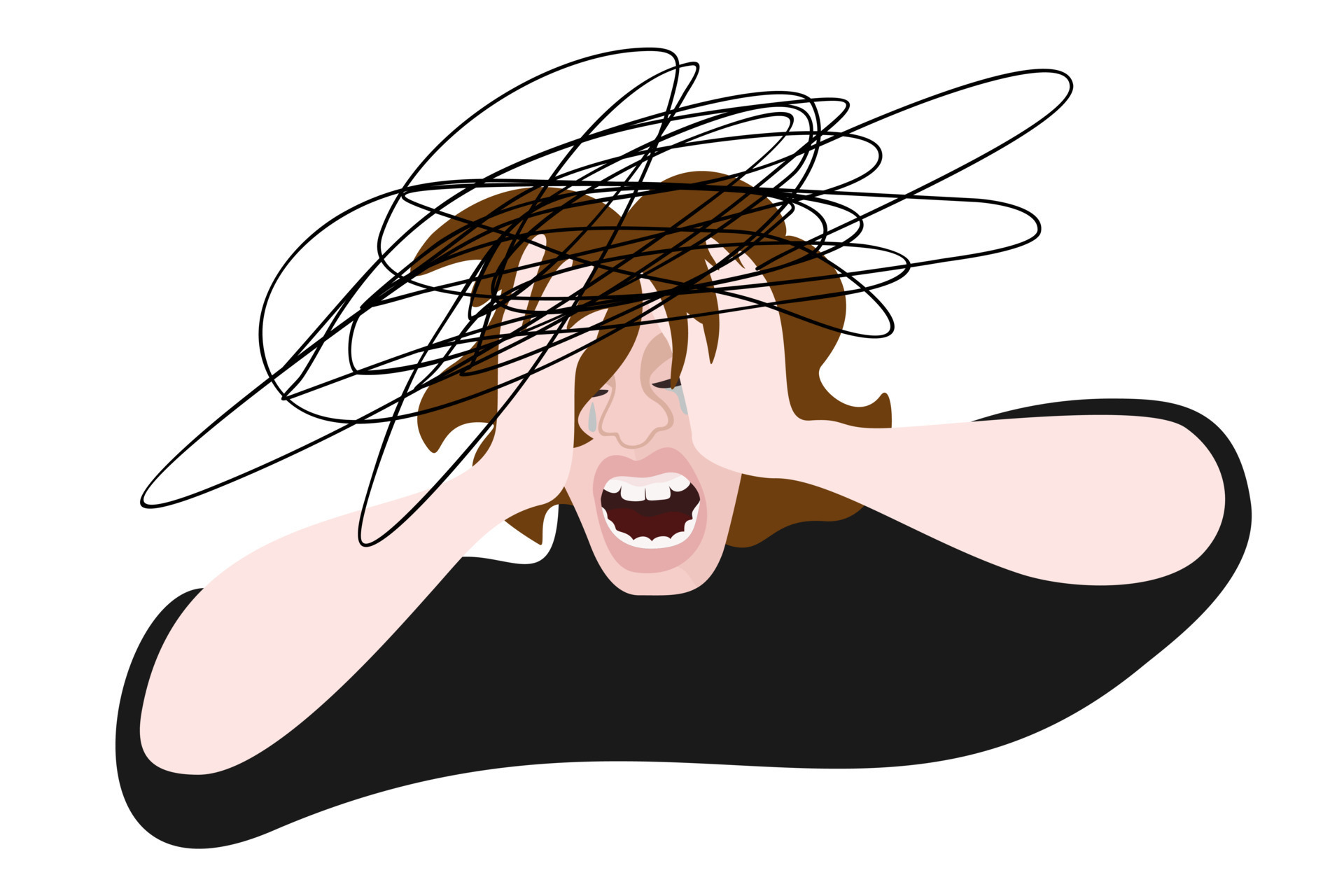
WE LIVE IN a time of layered crises, each portentous of the Future being worse than the Present. That’s bad enough if you are old. What if you are young? How would that affect your psyche, your life decisions, your morals? Why should you have children?
To be sure, the younger generations today live with more desperation, more solitude and more pessimism than had been the lot of the older generations who gave birth to them.
But what are these crises, and how do they manifest themselves at different levels of social life? Let me categorise these for easy overview. First is the dark backdrop of the Environmental Crisis. Learning that the ecosystems which provide predictability and sustenance on Planet Earth are shifting, and knowing that this will bring unwelcome and unending changes to humans hardly encourages optimism for the Future. More dramatically, the Anthroposcene Era is upon us.
Alongside that, the young have to live through the Geopolitical Crisis brought on by the defensive posturing that First World countries have adopted over the last 20 years vis-à-vis the Muslim world and the Chinese world. As a result, right-wing politics has never been as popular on the European continent as it is now, at least not since the 1930s. How the unipolar mindset that arrogantly emerged from the bipolar world is to adapt to a multipolar world is the billion-dollar question today.
Somewhat related to this, and to bring things closer to home, in Malaysia where race and religion are used not only to divide and rule but also to make all sides feel short-changed, victimised and alienated, one could talk about a Politicisation Crisis—of public discourses being monopolised by political squabbles. When collective identities are megaphoned to drown out individual agency, feeling comfortable and at home is not really possible, neither for the prescribed majority or minorities.
Tied to this is a general lack in leadership, which by extension generates a Respect Crisis in societies all over the world. This is related to the Truth Crisis wherein we no longer know what to believe, and who to trust. Fake news, alternative realities and conspiracy theories take their toll on our ability to identify what is, and what is not, the case.
Soft Power Waning
With the war in Ukraine highlighting the deep influence NATO has over European powers, we are reminded that the so-called Cold War never really ended. Some would argue that even the Second World War has not ended either. International Trade as the solution to warfare, and the foundation for economic growth at the national level, has taken bad knocks with the Chip War brewing, and with the imposition of sanctions even against big powers like China and Russia. The conflict in Gaza further undermines the basis for the Soft Power of Pax Americana.
The Income Gap Crisis has been growing since the fall of the Soviet Union and of leftist ideology as the basis for public-policy making. The one-percent phenomenon is more than just an economic observation; in the long term, it embodies the worst effects of Capitalism where the distribution of wealth is concerned. This snowballing accumulaton of wealth in the hands of the few is the socioeconomic crisis of our age.
The Technological Crisis, iconised by the Internet and Social Media, has been described through the disruptions it caused. But as the speed of this crisis accelerates, and the disruptions crash into each other and exacerbate each other’s impact on society and on individual lives, one should consider it a life-changing, culture-changing drift.
To be sure, the urgency of some of these crises is captured in the United Nations Sustainable Development Goals (SDGs) adopted in 2012, which in effect now constitutes the top-down formalised response to burning “environmental, political and economic challenges facing the world”. It is to provide the standard—albeit limited—rationale for the governance of countries and businesses throughout the world.
All the above types of crisis were predictable. This also means that they are all here to stay, and that we will have to learn to live with them rather than overcome them.
In 2020, however, a new global emergency appeared which deepened the sense of crisscrossed crises which has accompanied human society for several decades; this was the Health Crisis. The Covid-19 pandemic led to a lockdown of the world for almost two years. This was beyond the imagination of anyone; no one could now escape the sense of helplessness that the other abovementioned crises, through their extensiveness, should have instilled in all of us. Staying masked, keeping a decided distance from others, and getting sick from the disease, imbued us all with varying levels of paranoia and distrust. How this has affected young and old in the long term is still unknown.
A Tsunami Unending
There is one last type of crisis to mention though, and this one, being the most subtle is perhaps the most damaging at the personal level. I call it the Epistemological Crisis. As information gushes like an endless tsunami across our lives, how humans relate to knowledge in general—to how it is generated, how it is stored, how it is verifed, how it is value-added upon, how it stabilises society—has begun to change. And this deeply affects the individual, who has to decide what to make of the data bits flowing into his or her being, quickly and decisively.
When under stress, we naturally grow agitated and impatient. When under unending stress, our impatience becomes a pathological attitude. It makes us prefer easy answers, preferably ones that include some satisfyingly exclusive and dramatic twist. Religion provides us with easy and ready answers. Conspiracy theories feed us with unverifiable “aha” moments.
The tentativeness that the social sciences and the humanities asks of us becomes a luxury and a hindrance in a world of haste, of fear and of silent despiar. An epistemological impatience spreads in a world of multiple global crises, and this makes the solving of those crises all the more difficult.
Will impatience define social life in the coming century? Impatience with other humans, with governments, with differing opinions and ideas, with outsiders – and with oneself?
When desperation has become the psychological norm, reprieve and relief will have to be sought in simple joys, in patient contemplation like reading a thick book or meditating, and in taking the long view on things.
Dato’ Dr Ooi Kee Beng is the Executive Director of Penang Institute, and Director of its Forum for Leadership and Governance (FLAG@PI) Programme. He is also Visiting Senior Fellow at ISEAS – Yusof Ishak Institute. His latest book is Signals in the Noise (Singapore: Faction Press, 2023), a compilation of writings from 2018 to 2023). Homepage: wikibeng.com.

 Wikibeng
Discussion
No comments yet.