By Ooi Kee Beng, for The Edge Malaysia, 30 March-5 April 2024.
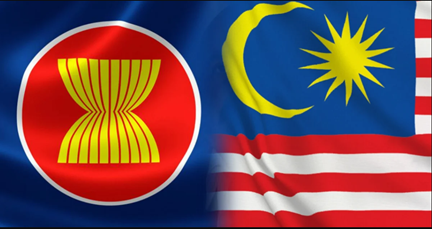
SMACK IN THE middle of this electoral term, Malaysia is going to begin holding the year-long chairmanship for ASEAN. When 2025 comes around, the Unity Government under Datuk Seri Anwar Ibrahim will have the opportunity to act on themes that best express what it considers of greatest importance where Southeast Asian regionalism is concerned.
The issue now is the picking of the key themes which are best for ASEAN at this time, and for Malaysia’s reputation, economic growth, and discursive evolution.
Now, this government came to power with the insight that the system needs reforming, and their leader spent his whole life arguing for the need to limit the greed and power of the political and economic elite. Furthermore, Anwar Ibrahim is the only Malay leader today who is most capable of realising that the country’s inability to transform itself is due to its nation building being introverted to benefit racial and religious bigotry.
I argue that racialism and religious extremism are more possible the more fenced in a national discourse is; that explains why Malaysian political arguments are caught in a loop. To the extent that this is correct, then the Reformasi Movement that provides legitimacy for Anwar has to go seriously regional in its outlook and initiatives.
Regionalising the national discourse
As author of The Asian Renaissance (1996), Anwar Ibrahim is the Malaysian leader who can connect the dots and convince the people that the country’s national identity, economic maturity, and global relevance are best served by a regionalising of its political discourses. Intra-communal tensions within the country are best diffused through national participation and location in larger geopolitical contexts.
As if the stars are not aligned enough yet for Anwar Ibrahim to become prime minister after 25 years of struggle, the ASEAN chairmanship now offers him the chance to integrate the many segments of his ideological leanings through policies for economic development which depend on regional possibilities and synergies.
Thus, themes that his administration chooses to highlight in 2025 will carry much more significance for the nation-building process than had been the case before when Malaysia had been the ASEAN chair.
Motherhood statements of the type we witnessed 10 years ago, and 20 years ago, when Malaysia last chaired ASEAN will not do. In fact, such bland words would damage Anwar Ibrahim’s international reputation as an international statesman.
In 2015, when Najib Razak was prime minister, the slogan was “Our People, Our Community, Our Vision”. A decade earlier, in 2005, under Abdullah Badawi, it was “One Vision, One Identity, One Community”. These were empty words that generated no expectations whatsoever, and were chosen to suit the lethargic ASEAN bureaucracy and the lack of regional ambitions on the part of the chairing country.
How should one advise the Unity Government then to utilise the occasion in 2025, both to stimulate extroversion of Malaysian domestic discourses and to attain economic growth and geopolitical stability?
International Trade as Panacea
First off, as chairing member state, Malaysia will have to remind the governments, if not their peoples, that ASEAN is a necessary mechanism for the region to integrate economically and geo-strategically, and that the organisation is running out of time.
Championing international trade, to my mind, given the multilateral trade agreements already in play, and given the need to slow, if not reverse, present geopolitical tendencies towards economic warfare and closed economic zones, should be the key rationale behind Malaysia’s role in regional and global affairs.
Its impact on domestic concerns should be highlighted as well. Since one cannot call for economic integration today without mindfulness about climate change, commitment to environmental sustainability is a necessary stance. Alongside that. helping SMEs, the basic organism in the economies of all Southeast Asian countries, will need to be a major objective, necessarily pursued through digital innovation and connectivity, and through regionalising their ambitions.
More directly, the ASEAN chair should at the very least focus on the following:
- Deepen free trade agreements (FTAs): Malaysia should more aggressively advocate for comprehensive and inclusive FTAs within ASEAN and with external partners. These FTAs should seek to lower trade barriers, facilitate trade and investment flows, and promote transparency in trade rules.
- Promote regional economic integration: The ASEAN Economic Community (AEC) Blueprint and the Regional Comprehensive Economic Partnership (RCEP) should be pushed further. By strengthening economic ties and harmonising trade and investment regulations within ASEAN, Malaysia can help foster a resilient and interconnected regional economy that can withstand external disruptions and trade tensions.
- Enhance digital trade and e-commerce: Malaysia should also champion digital trade and e-commerce within ASEAN. Promoting cross-border digital trade, standardising e-commerce regulations, and deepening digital connectivity will provide the SMEs in all member states with access to larger markets.
- Improve supply chain resilience: In summation, enhancing trade facilitation measures, streamlining customs procedures, and improving supply chain resilience within ASEAN are all necessary tasks, as are investing in infrastructure, improving connectivity, and utilising digital trade facilitation tools. These will also mitigate the risks of disruptions due to trade conflicts.
The ASEAN chairmanship is also a super occasion chance for the Unity Government to regionalise the national discourse and focus. Anwar Ibrahim is well suited to play an internationally relevant role as peacemaker and as moderator of geopolitical tensions.
Most importantly, Anwar Ibrahim, in recognizing the importance of trade in driving economic development and fostering peace, should advocate for the lowering if not removal of trade barriers, support trade connectivity, and promote inclusive policies.
Second, he must promote multilateralism, with the understanding that multilateral institutions are essential tools in addressing global challenges. In fact, throughout his time in office and not only as ASEAN Chair, he should also advocate for reforms of the largest of such organisations, such as the WTO, the WHO and even the United Nations.
Other areas where he can make a difference and strengthen Malaysia’s commitment to fair and peaceful globalisation are in the areas of diplomatic mediation, humanitarian assistance and environmental sustainability. By promoting ASEAN regionalism, he can help transcend political divides in the domestic arena.
As Mahathir Mohamed also realised during his time in office, it is by championing initiatives at the global level that one can gain competence, experience and reputation as a statesman, more easily than when one only focuses on domestic issues. Indeed, if anyone can, it is Anwar Ibrahim who is more capable than any other Malaysian leader of showcasing international achievements to his domestic audience. That is of course best done if the focus is kept on economic and reputational gains for the country.
Engaging in international diplomacy also allows Anwar Ibrahim to build alliances and partnerships with other countries and international organisations. These can be leveraged to promote Malaysia’s interests and advance domestic priorities such as economic development and security cooperation.
Overall, by strategically leveraging his engagement in international initiatives, Anwar Ibrahim can enhance his political strength domestically, bolster his leadership credentials, and garner support for his government’s reform initiatives.
Datuk Dr Ooi Kee Beng is the Executive Director of Penang Institute. His latest book is Signals in the Noise. Notes on Penang, Malaysia and the World (Faction Press, 2023). Homepage: wikibeng.com.

 Wikibeng
Discussion
No comments yet.