By OOI KEE BENG, Editorial, September 2025, Penang Monthly
WE LIVE WITHIN narratives, don’t we? Our identities are built on them. Our collective identities are definitely group memories woven by time into stories and narratives, and into memories and myths.
For places and times for whom there are few stories, we use terms like “prehistorical”, “no man’s land”, “wilderness” and even “the hinterlands” to describe them. For personalities unknown, we have other terms; we refer to them as being “off the grid”, being an enigma, a phantom, a ghost, a shadow or a cipher.
Narratives are, by their nature, a collective event and a social event; in sum, they are an exercise of power as well, a nexus where different wills and opinions wrestle each other to emerge with as much claim to being true as possible. It is therefore far from correct that tales about ourselves are dictated from within, by us. In fact, they emerge out of the very process of co-existence and inter-conflicts.
As the arena where stories could be told expanded with globalisation and modern information and communication technologies, the struggle for attention and the need to tell one’s stories have become all the stronger. The avalanche of information that has hit us in recent years through the Internet in its various formats not only bury information through pure abundance, it also dilutes the content at the same time, making them less interesting and consequential.
Dramatic headings thus become important, and click-bait captions. Graphics and videos are valued more for their sensational value than for their truth value; in fact, with deep fakes, it’s now hard to tell one from the other. The fear is that we then tend either to ignore them for being manipulative or we watch them for entertainment, in both cases doing it with a sneer.
An Ontological Crisis
If having reliable stories about ourselves and our surroundings is vital to our sense of place, our sense of purpose and our sense of self, then the ontological crisis we are faced with is indeed a grave one.
In what sense do I exist if I can’t be sure of my defining narratives and facts? How are my collective identities relevant in social interactions if generalisations suffice, and nuances are deemed befuddling?
Staying sane is no easy task if we cannot rely on our recollection of milestone events in our lives. In this context, the Covid-19 pandemic did teach us one important remedy against paranoia and the slow dissolution of the self: this is the notion of “proximity”. Many of us came to rely on interactions with those close to you, on doing what is close at hand, and on what you can touch with your hands and feet.
The pandemic revealed how fragile product supply chains are—and this was of course worsened by the trade war initiated by the US in the mid-2010s. Across the world, tolerance for inter-continental cultural and ethnic differences suffered a dismal drop not seen in decades. Suspicion grew even deeper when information could no longer be trusted.
This affected the part of our collective identities built on the impact on us of the stories “distant others” had been telling about us, and of those we had been telling about them. Global cultural harmony has been suffering great challenges, and no alternative has yet appeared that allows for these deep rifts to mend. Such a remedial process will take time to evolve.
Meanwhile, we have to rely on ourselves, on what we know rather than on what we are told; on what we experience concretely in our daily lives than what we are fed audially and visually online.
What we need is a greater sense of immediacy, of authenticity.
Proximitism—allow me herewith to coin that word—is the transitional attitude through which individuals can guard oneselves epistemically and psychologically against the chaos and confusion that is increasingly infecting their information inflows.
The point—and therein lies the remedy—is to seek certainty, reliability and insight through individual and immediate participation—in action, in discussion and in travel. The more this involves physical activity the better.
The undeniability of the physical world, experienced through the body’s interaction with it; the comforting pain in muscles pushed to their limit for the day, through jogging or some other exercise; the sounds and smells aroused by gardening work; or the pling-plong of a musical instrument; all these are examples of proximitism experienced by the individual as reminders of the real world beyond the virtual one. It is the immediacy of such actions—understood literally to be a lack of a medium—that best grant us authentic experiences.
Another phenomenon that is close to what I mean by proximitism is “domestic tourism”. Visiting places close by should be the natural course of action for anyone wishing to take a break from their daily routines. Instead, cheap flights and enticing information about distant places had made it the favoured option for most people before the pandemic to travel as far away as possible whenever they wished to “get away”, to eat imported products instead of local ones, and to see any distant place to be greener than a proximate one.
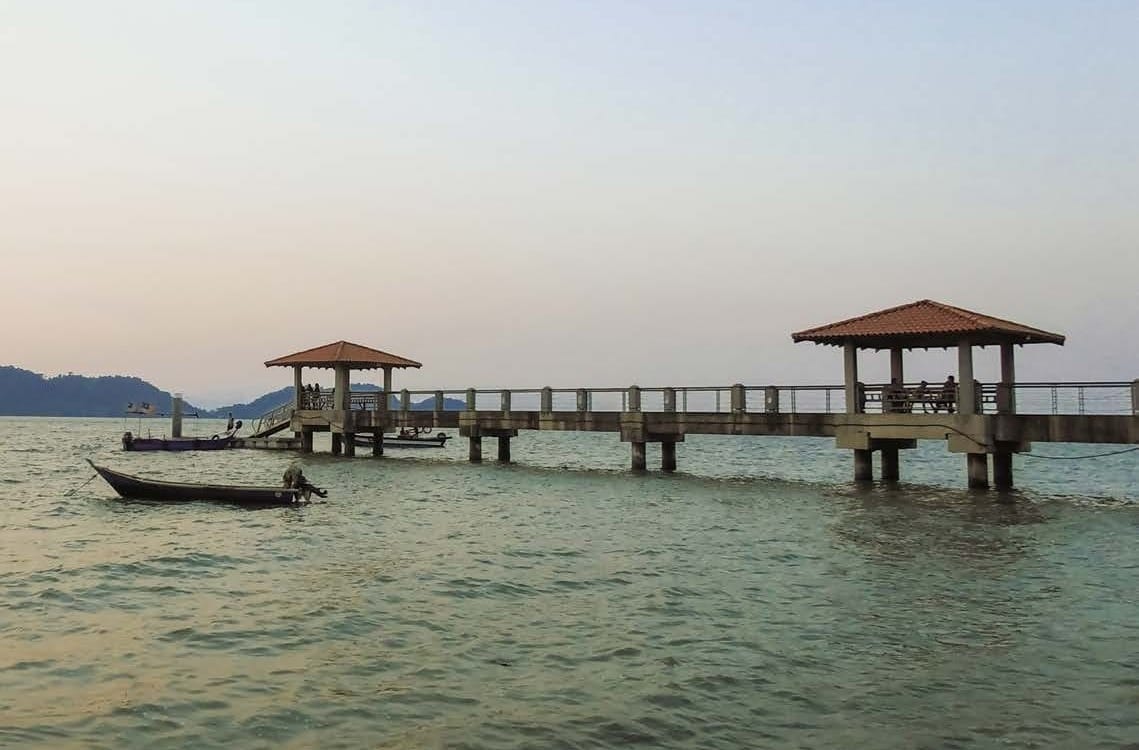
Discovering a new restaurant around the corner, a new hill to climb in the next town or a new beach to enjoy down the coast—these are simple events that should gain new relevance in these times when we can’t trust in much of what we are told.
Rediscovering the world at its most basic, as immediately as possible… That is as good a defence against the epistemic and ontological attack on our exhausted modern minds as any other.

 Wikibeng
Discussion
No comments yet.