By Ooi Kee Beng, Penang Monthly editorial, February 2026
A MAJOR AND very useful instinct I developed when dabbling in wushu sparring many decades ago was the ability to read movement. This was part and parcel of physical defence, of course. Not only does one have to be fully attentive all the time—and that would be why one tires so quickly during a bout—one has to predict what the opponent is about to do before he does it.
Philosophically, one learns mutualism in the sense that whatever I could do to my opponent, he could do to me as well. That was why one’s selected training partner was often someone equally skilled and similar in build. One learns to stand one’s ground against reasonable odds, and one learns to be humble in the face of another’s agency.
Now, these simple facts have great significance in daily life. Being sensitive to my immediate surroundings meant that I became more conscious of movement in my immediate vicinity, and of what to expect in the next second. For example, I found that walking through a crowd became easier after my training. I began to note where a person or some vehicle was going to go, and not where they were at the present moment.
When interacting with people, I became more and more respectful of another person’s space, the area within which they felt comfortable. If and when I entered that personal space, they felt a need to react in some way. They could welcome it or they may not, and their body language would tell me which it was. One could play safe and always stay at a safe distance, or one could be playful with that space as a matter of socialising. All this is basic human behaviour.
HOMES AWAY FROM HOME
What this sensitivity taught me is the importance of immediate surroundings to the wellbeing of an individual. In a private space, in my own home, I decorate my rooms and walls as I wish. I arrange my furniture as it suits me. I listen to the music I like, and so on and so forth. That is the essence of private space, and we assume this to be vital to an individual’s wellbeing.
“A room of one’s own” is a basic need.
We pity a homeless person because he does not seem to have any right to any space. He has no calm space to call his own. If he has no home, he has no castle, as it were.
Between private and public space are other places where a person has some say, and where his presence is not an intrusion. For a modern urbanite, that would, first of all, be his workplace. Beyond that, there are public thoroughfares and concourses where crowds criss-cross in daily life.
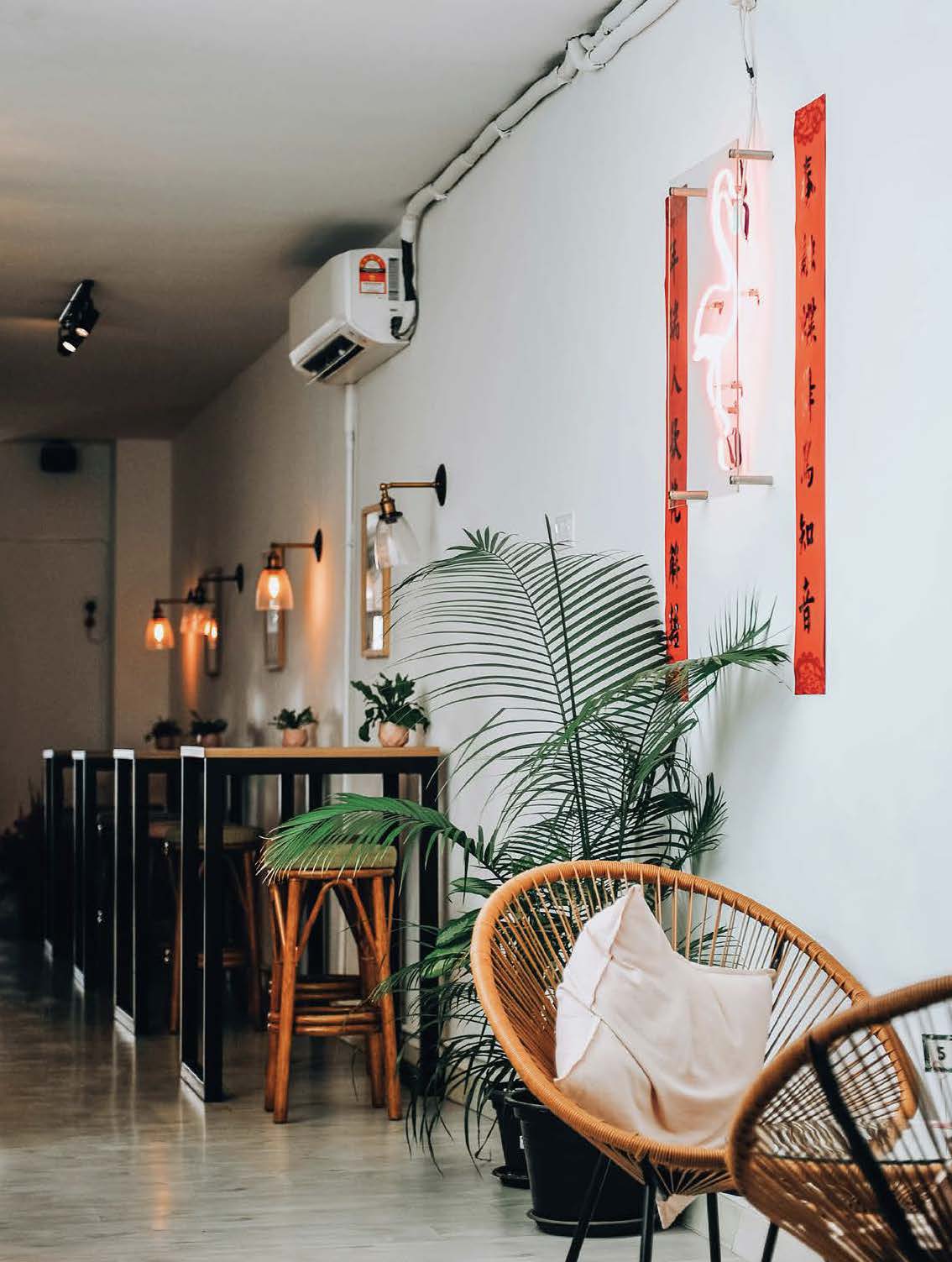
Then, there are shops and cafés and boutiques where a person is welcome under certain conditions. Those are, however, not places he controls. He has to manouevre his way through them. These are transactional spaces.
This brings me to an important point. If urban living means that I possess a little space to call home, feel safe in and control, then how much I feel at home in a city would depend very much on how much home-like access I have when out in public. Familiarity with a city, of course, means that I can traverse it comfortably, and I know of places to visit where I feel comfortable, where I may feel welcomed and where I feel at home to a degree.
These are what is described as Third Places, including museums, galleries, shopping malls, etc. They allow access—under certain conditions—to members of the public when these people are away from home. Providing such places is seen as a key consideration in good city management.
But why I began this article by talking about private space and individual movements is that the level of comfort and safety—and homeliness—in a city is not dependent only on city planners and street economics. It is about the inhabitants themselves as well, about how at home they feel in their own skin; how safe or threatened they feel outdoors; how respected they feel being among fellow citizens.
In short, how citizens treat each other in passing is a vital consideration. I tend to think that civic behaviour among citizens is what makes public spaces welcoming—in any city, however well planned.
My point, really, is to note that our comfort zones are determined as much by pleasing and welcoming—albeit passing—social interactions as they are by well-planned physical environments. People managing social spaces in a civilised and mutually respectful way is what renders a city attractive. Our comfort zones are more mobile than we might think.

 Wikibeng
Discussion
No comments yet.