By Ooi Kee Beng, Editorial for March 2026 issue of Penang Monthly.
ACTIVE AGEING is a trendy term indeed. It is an inspirating notion, serviceable for policymakers and inspirational for ageing individuals.
However, and poignantly, it also implies that passive ageing is the default mode for most old people. This is probably because old people do become more vulnerable to accidents and mishaps, need care and constant support, and health issues begin to dominate their day. This is a depressing and potentially discouraging situation to be in.
We assume that what turns passive ageing into its active variety depends on measures society takes to provide general support to its older members on one hand, and on encouraging the ageing individual to get off the sofa on the other.
The pro-activeness of the ageing person is key, and on that front, external aids can only have limited effects. In that important sense, active ageing, in many cases, requires mental shifts in the person concerned.
To start with, we should not assume that an ageing person was a proactive person before retirement or old age. They might have been a rather passive person all their life, and for such individuals to become an active person in old age would require much personal honesty, motivation and contemplation. More energy and contemplation than their falling energy level can provide.
Becoming pro-active in old age if one has been a generally passive person when young cannot be an easy task.
Now, by proactive, I mean the psychological ability to feel and to exercise agency, to be an initiator of things. The parts of our mindset and lifestyle which have for most of our life been essentially passive, routine and reactive may need to be identified first. That can be tough.
But maybe we don’t need to do that. We can go surgical instead of therapeutical.
We are not trying to excel in old age. We just want to acquire late-in-life meaning in daily life that comes from rejuvenating our ability to mean, to give meaning to our actions. That requires a pro-active attitude, and the acquiring of agency.
MANAGING REBIRTH IN OLD AGE
Back to basics then. Back to being a child again.
As we know, nothing makes a toddler happier than to toddle, than to realise that she can toddle. The old person needs to recover this joy. Enjoy waking up, enjoy walking, enjoy any physical activity as a miracle the way we did when we were children. Washing the dishes is something to celebrate if successfully done, sweeping the floor is a rewarding act of bodily coordination and of precision in movement. Whatever the child felt, the old should seek to rediscover, and not consider it banal and routine, and not worth shouting about.
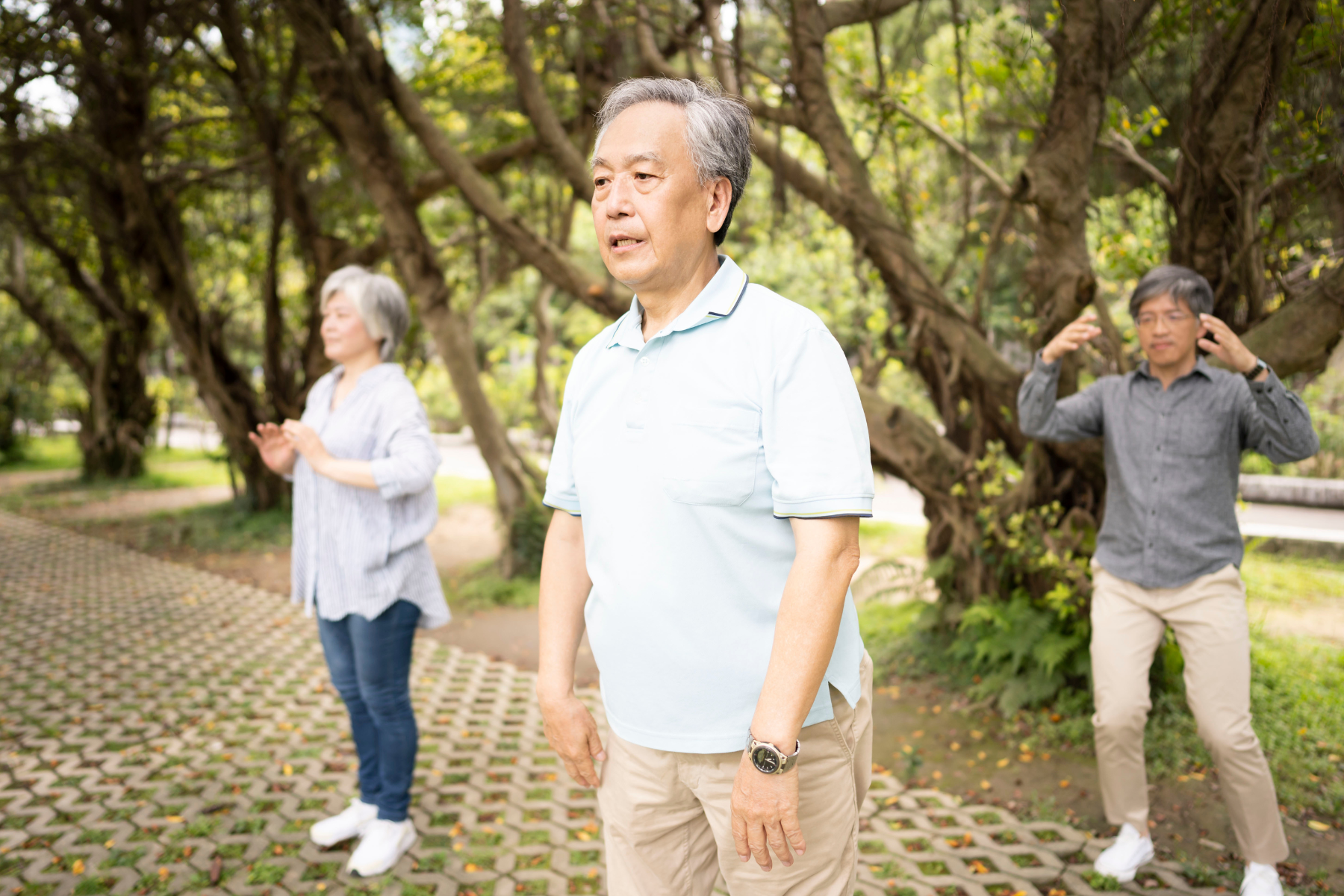
Applying that perspective to any physical act the ageing person manages to perform is Active Ageing 101. Very Zen-ish. And why not? I would call it Liberational Ageing. Taijiquan, anyone? Gardening, anyone? Morn-ing walks?
SPHERES OF EXISTENCE
Now, I believe that Physical Prowess is but one of three spheres of human agency.
As the toddler that we all once were grew, she quickly learned to play social games. She gained soci-ality beyond her birth-given physicality. She learned to interact, she learned to read the actions and reactions of others, she learned mutualism and morality. She learned to play. She soon took such physical acts for granted, she evolved into a cultural being, a social animal.
She learns to behave. And in gaining social skills, she enters the second sphere of human agency.
Social Prowess is what we strive for as social beings. This is also where agency can be drowned out—through endless compromise, through being constantly subordinate, through all-round coercion. In old age, when social pressure is low, we have a chance to rekindle that. Thus, we should welcome the low level of social encounters when ageing. Time to read, to write, to have long discussions on matters we were once interested in. Time for a new lifestyle that is not determined by income level and social climbing. Maybe try stand-up comedy. Join a book club. Learn a new language.
The third sphere of human agency is Intellectual Prowess. This is the realm of knowledge, of epistemic skills. This is where philosophy and religion beckon, where the sciences summon, where language and structure dominate. The goal is to seek order in the world, to make sense of all we see. Existence confounds and confuses, and our intellect is forced to find understanding and meaning. And all the forms and structures we adopt along the way articulate much of our individual identity.
We collect experiences, and so the young often think that the elderly are either wise men—or idiots.
In times recently passed, the very fact of having lived gave us experience and wisdoms we could offer our grandchildren. That mentoring role is now taken over by online search engines, social media, and AI. But no problem. Our knowledge is granular and not generalisable.
Realising that our identity is the result of our intertwined Physicality, Sociality and Intellectuality, we may develop or preserve our sense of agency by allowing for a second maturing—from infant to elderly. But this time, we do it on our own terms—and live pro-actively in old age the way we should have lived all our life.

 Wikibeng
Discussion
No comments yet.