By OOI KEE BENG (Forum, The Edge Malaysia Weekly on February 23, 2026 – March 1, 2026)
The line of enquiry whenever Southeast Asian regionalism is mentioned together with European regionalism is how they are comparable, and how they can learn from each other. And given the European Union (EU) has a much longer history than the Association of Southeast Asian Nations, and since many of its members are considered developed countries while Asean member states — except Singapore — are all classified at best as developing countries, the unspoken assumption is that the learning would be largely done by Asean, and seldom by the EU.
As a rule of thumb, Asean experts automatically point out how dissimilar the two organisations actually are, and how comparisons between them are interesting more for academic reasons than practicable ones.
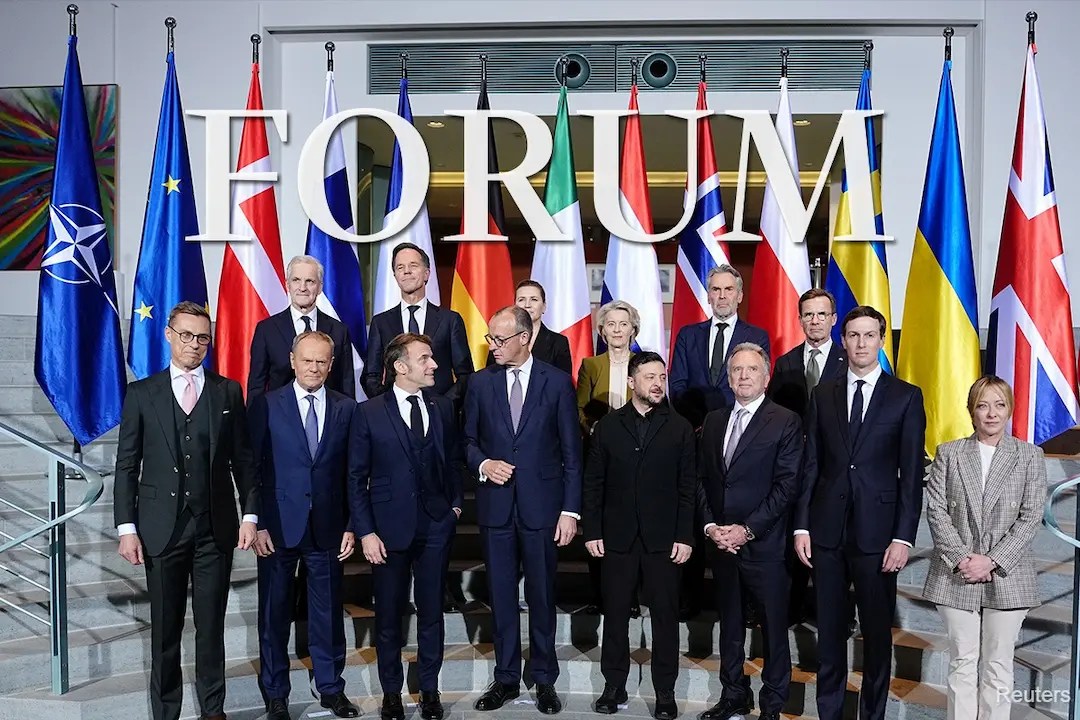
However, US President Donald Trump is now blatantly allowing narrow American national interests to overshadow Western solidarity. Initially affecting matters such as multilateral trade, the Ukraine war, as well as European military spending, the combative trajectory Trump is on calls into question a lot more than that, including the future of Nato, and the world order established in the 1940s.
Europe, at this push-coming-to-shove moment in post-World War II history, faces an unhappy dilemma. Its inherently subordinate and dependent status within Pax Americana has become all too clear to its many national governments.
The groundbreaking speech at Davos 2026 by Canada’s Prime Minister Mark Carney about axiomatic changes needed in Western thinking is a much-awaited wake-up call. It is the voicing of a reality Europe has not wanted to accept or to hear expressed so vividly.
Here and now, at this crucial point in global reorganisation, there is indeed something very significant that scholars can learn from a comparison of European and Southeast Asian regionalism.
Appearing more alike than before
EU and Asean are both post-WWII creations; more pointedly, they are Cold War creations. They came into being as part of the evolving strategic plans of the two biggest victors of the newly ended war — Russia and the US. We witnessed the paradox of how Japan and China switched roles in the eyes of the West in the late 1940s. An enemy hated enough to be hit with atomic bombs, Japan quickly became a key ally, while the recent ally in WWII, China, became a key enemy instead as the Cold War heated up.
Also, Europe was not the only one having to deal with its exhausted and impoverished post-colonial situation; former colonies such as those in Southeast Asia were also having to rise from the dust of colonialism as well. These were the two ends of the geopolitical implosion, as it were — a geopolitical quantum entanglement that lasts to this day. Let’s imagine how challenging a situation this is, both in terms of how Europeans are suddenly dispossessed of their sense of global relevance and cultural superiority and how difficult it will now be for them to reorientate towards an uncertain future. A dark storm is brewing, and their umbrella has just been blown away.
Imagine Asean being as integrated as Europe within all its three pillars — economic, security and cultural. Imagine it protected, nurtured and facilitated by its neighbouring superpower, China. Imagine that this protector, like the US in the case of Europe, had over seven decades appeared to have guaranteed their domestic and regional growth and their sense of security. Then one day, Beijing decides to return to its isolationist tradition — to “Make the Middle Kingdom Great Again” — and begins caring more immediately about strengthening and expanding its home territories instead of working towards apparent common goals, and aiming for a sustainable and inclusive multilateral world.
Suddenly abandoned and betrayed, Asean would at first not believe what it was seeing. This disruption would border on being an existential challenge, given the level of integration already realised, and the depth of common moral conviction that symbiosis had held.
Now, what Asean countries would then seek to do would not be unlike what we may expect the EU to do in the coming months or years.
Forced to realise that global power lies in having control over the supply chain of key industries — and that includes, apart from commodity markets, weapons and military bases, financial channels and payment systems, logistical routes and cultural dominance, scientific knowledge and information flows — both these regions can be expected to strategise hard at being pragmatic, adaptive and innovative:
● To diversify their markets;
● To heighten their regionalist credibility and unity;
● To localise their supply chains as much as possible without paralysing growth;
● To collaborate as middle powers with other middle powers, in order to limit the heft of the big powers;
● To act as middlemen and buffers between the big powers in order to achieve a decentralised but stable system of power;
● To champion multilateralism and through that, generate a set of rules acceptable to all involved; and
● To humour the big powers where possible but with the conviction that middle powers working together can be the equal of big powers.
A unipolar or even a bipolar world is necessarily a hierarchic one, best imagined as a pyramid. Multipolarity, which in effect would depend a lot on multilateral solutions such as the EU and Asean, will allow for a more rounded world built on interdependence.
When middle powers unite, and do not allow themselves to be de facto vassal states or dependencies, big powers can be humbled, or at least be encouraged to act with restraint.
Therein lies a critical lesson for any wannabe hegemon — peaceful relations lie in the cultivation of mutual progress and respect. In the final analysis, stable human consensus builds on empathetic consideration of each other, however hard that may at first appear to be.

 Wikibeng
Discussion
No comments yet.