By Ooi Kee Beng for The Edge Forum, 21-28 March 2026
IT IS SAID that pandemics change the world, but in such profound ways that it takes a long time before these changes become obvious. Once the paths they furrow become deep enough to be accepted as “The New Normal”, much of what was the Old Normal would have been forgotten in the minds of most people.
This is why historians are important. Keeping past perspectives allows for contrasts to new perspectives to remain palpable, imaginable and evident. And in that intellectual hall of mirrors, humans have a chance to learn from the Past, not be lost in the Present without knowledge of how and whence that came into being.
The generation that lived through Covid-19 thus has a responsibility to keep their minds open as the post-pandemic period rushes by, and to perceive what the deep changes have in fact happened.
We all lived with a real threat of death for months, we realised that we could do without many of our social relationships, all of us learned that some level of paranoia is a rational survival strategy. And we saw that globalization, with its overextended supply chains, is not all it was made out to be. It made us fragile and dependent. We came out of that period convinced that we need to be more local—or at least regional—again.
Proliferating Supply Chains
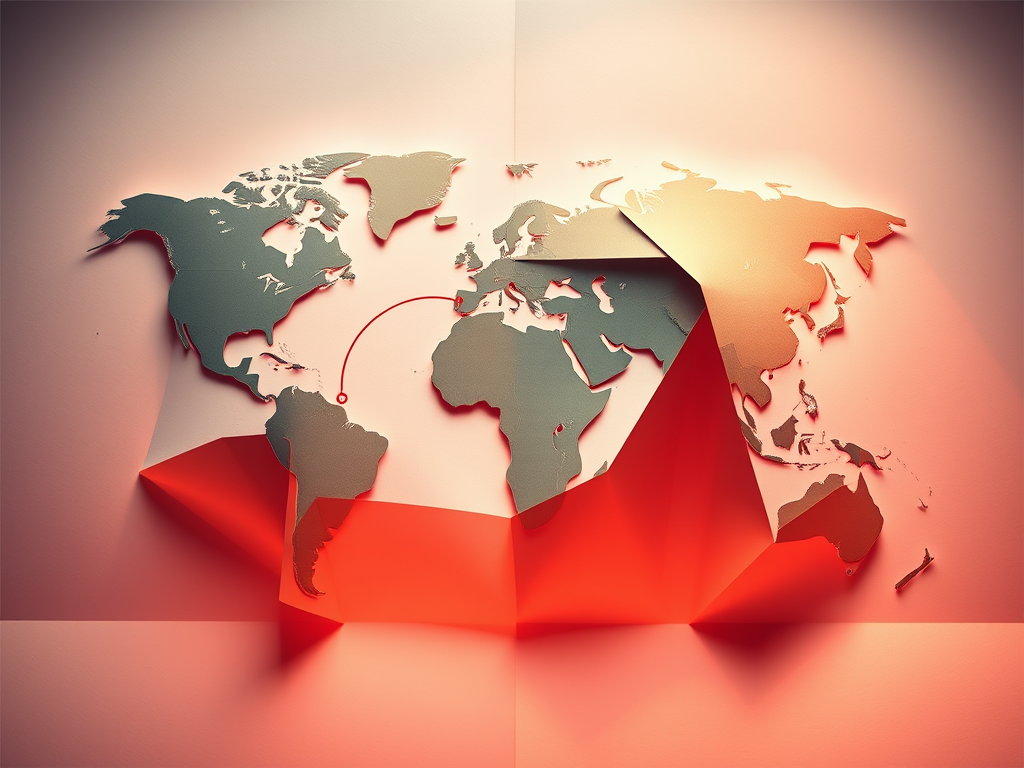
Such a shift in mind-set carries great geopolitical implications. More broadly than ever, we come to see how certain countries, certain governments and certain corporations control vital supply chains more tightly than others. Not only that, we have come to realise that supply chains are not only about commodities. They cover much more than that. Wherever money and power are involved, there is a dynamic structure in place which is analogous to a supply chain. This include all the global ecosystems built around education, knowledge, information, international payments, military might, weapons production, global legislations, and even international aid.
Global hegemony is based on supply chain control. This global epiphany, if I may be a bit melodramatic, had already begun with the comprehensive and steep rise of China and its global influence since the turn of the century. This was abetted by a new vocabulary in international relations and geo-economics: BRICS, AIIB, SCO, etc on one side, and Quad, Indo-Pacific etc on the other.
Collaboration in the Global South was growing hastily to offer an alternative to the “Rules-based order” maintained by American power since 1945. This tension between western powers and emerging non-western big powers was not something that could function as a “status quo”. Something had to give.
The Thucydides Trap was proffered almost as a law of nature to explain and predict the path for the 21st century—and quickly replaced serious historical analysis.
It was just ten years ago that Donald Trump won the presidency of the United States of America. And it was just 11 years ago that Britain decided to leave the European Union. Brexit became reality on 1 January 2020. Those were shocking events.
Then came the Covid pandemic in 2020, resulting in the death of 7.01 million people worldwide. Then came the invasion of Ukraine in 2022. Then came the Hamas penetration into Israel on October 17, 2023, followed by Israel’s destruction of Gaza and the deaths of over 700,000 Palestinians.
By the time Trump returned in 2024 as POTUS, most of us were so dazed and confused, not to mention shocked and awed, that his return seemed an inevitability. Tariffs followed, and then Venezuela, then Greenland. Then came the 12-day war between US/Israel in June 2025, which erupted eight months later into the bombardment of Iran by US/Israeli missiles. Iran responded by sending drones and missiles into US military bases in its neighbourhood, as well as Israel.
The powder keg that the Middle East had always been was finally detonated.
Why this latest conflict started at all, that remains unclear. No incident triggered it, no Austrian prince was murdered, no sinking of any Lusitania steamship, no crossing of any Marco Polo Bridge. But it did start, and most dramatically with a decapitation of Iran’s political leadership.
A good guess would be control of Iranian oil. Another is the need for a distraction from the Epstein files on Trump’s side, which Netanyahu knew to make full use of in order to fulfil Israel’s long-standing ambition to destroy the Islamic Republic of Iran, whose long-standing ambition has been to destroy Israel.
One can of course say that the Middle East was always ready to fall apart anyway. But this compacted string of events, culminating in open war against Iran in February 2026, exposes the profound change that had been taking place this century in geopolitical sensibilities. The unfinished business of Colonialism, the Second World War and the Cold War could no longer be ignored or postponed.
Decolonisation Phase Two
The strategies in organising a new world order after the Second World War was strongly tied to the tensions of the Cold War. Those led to the formation of NATO and of the Warsaw Pact—West versus East. A world cut in two.
Now, decolonisation happened under the Cold War as well. Military resistance, damage control, and post-colonial symbiosis characterised the strategies of retreat for the colonial masters.
As the Old World Order now breaks apart, in order to avoid the chaos which many would predict for such times, it is vital for the world to construct new ways for managing supply chains.
The terms to embrace are practically given. In a world of nation-states seeking sovereignty, a complex and humble system of thought promoting subsidiarity in governance, regional growth before global growth, social development before economic growth, environment before development, mutualism before competition, and humanity before technology, provide a better basis for a post-hegemony, post-unipolar, and post-imperial world.
Smaller countries like those in Southeast Asia will have to leave Phase One of Decolonisation behind. That was a defensive project manipulated by the needs of the rules-based order. This brought both good and bad. Phase Two involves regional development and a cultural connection to closer surroundings, and of course, a healthier relationship to bigger powers and to global supply chains.
* Datuk Dr Ooi Kee Beng is the Executive Director of Penang Institute, Founding-editor of Penang Monthly, Festival Director of George Town Literary Festival, and Senior Visiting Fellow at ISEAS — Yusof Ishak Institute. His books include the award-winning “The Reluctant Politician: The Life and Time of Tun Dr Ismail”, “In Lieu of Ideology: An Intellectual Biography of Goh Keng Swee” and “The Eurasian Core: Dialogues with Wang Gungwu on the History of the World”. Web page: wikibeng.com.

 Wikibeng
Discussion
No comments yet.