By OOI KEE BENG, Penang Monthly April 2026 editorial
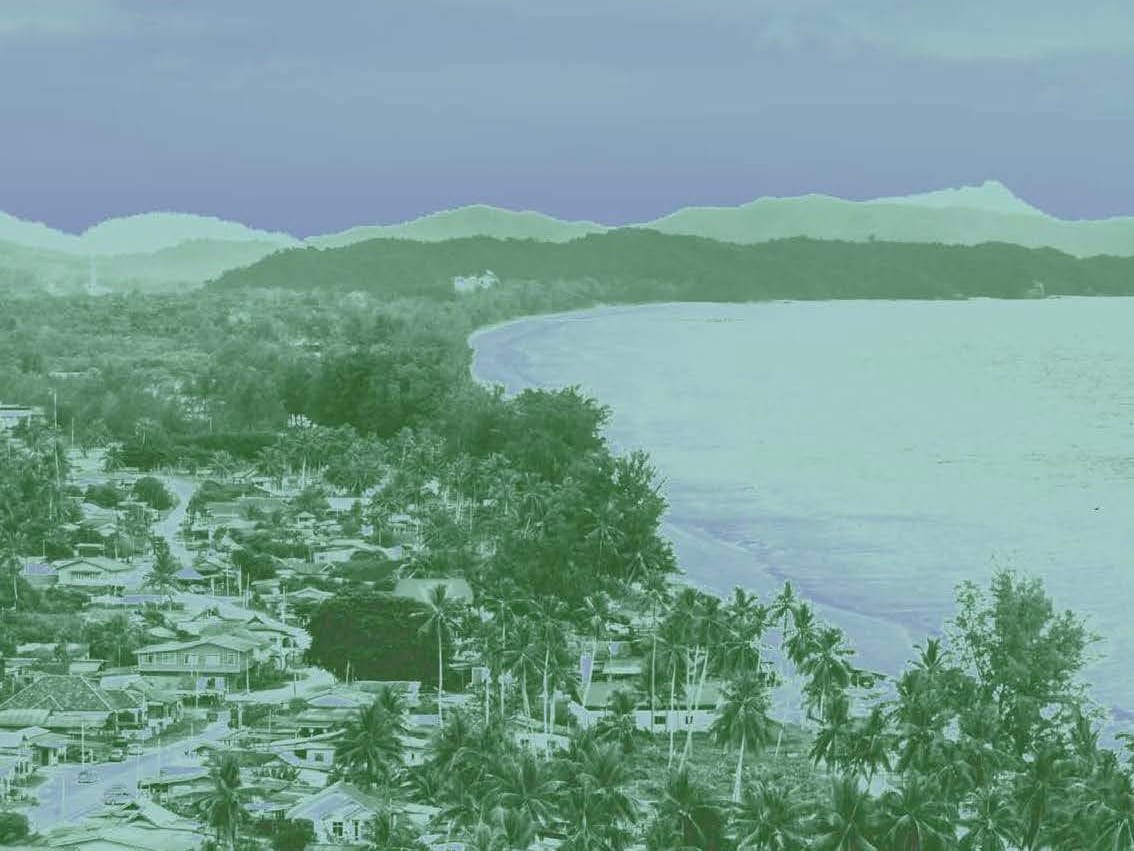
IN THE ENGLISH language, a “hamlet” or “colony” connotes a place of untainted being. Nature is close by, human warmth is at hand and social changes are slow enough to be embraced. But the rural, in practice, is often messy, starting with the domestic and half-tamed animals littering the path. There are ducklings in marching forma-tion and panicky chickens. Then come the wild ones that have learned to follow the pace and patterns of village life, including crows, rats, centipedes and cockroaches. One could go on and on.
Yet an idealised version of the country remains fundamental to many Malaysians’ sense of being, as a physical aspect of our history. Generally, we think of history as the past captured in words. However, when revisiting one’s home village, the past exists in concrete form, aided by strong memories and familiar names knotted in place. The thoroughfare most frequented by all, the knolls and hills filled with exciting stories told by grandmothers, the rivers safe to swim and banks safe to dive from, the fruit trees that nobody owns, the best spots to hide from the midday sun, the playmates now grown but back for the weekend, the weathered but kind looks of their parents…
And of course, the pattern of stars not seen anywhere else.
This strong affinity to our place of birth—or more correctly, the place where we grew up—is hugely interesting. No one argues about any Malaysian’s need to balik kampung, to return to the village. This need is one of the few aspects common to Malaysia’s main cultures, which hints at a shared historical trait: a diasporic relationship to the world, one that is essentially itinerant rather than characterised by fixity or timelessness. The Chinese, in particular, use fan xiang (返乡, lit. balik kampung) to describe this search for homeliness. They also have an interesting maxim, “luò yè guī gēn (落叶归根, lit. falling leaves return to their roots). This reflects a realisation that emigrants cannot but ultimately wish to reconnect with the authenticity of childhood.
This idealisation of the rural, the country, may also be a symptom of how the urban has become the default mode of living for many Malaysians. Cities, where a multitude of rules have to be followed, are the realm of the Freudian ego and superego. Village or small-town life, in contrast, is where the id has a larger say. We could argue that global-scale urbanisation demanded by late modernity has added to the need for recent city-dwellers to return to a setting where social ties are warm, familiar and more spontaneous; where nature smells pure, even if tinged with the scent of rot, mud and animal waste.
This sense of a pre-urban, or at least less urbanised, lifestyle lingers among those who have moved to cities—such as the author of this month’s cover story on exploring Malaysia’s small towns—or even among those a generation or two removed from the country. City-dwellers, whether in Penang or elsewhere, may very well wish to also remain small-town locals. This should be possible in well-planned cities, which are, in essence, agglomerations of smaller settlements whose residents try their best to feel at home. Sadly, urban residential estates only offer a diluted version of this sense, despite their planners’ intuitive appreciation of city-dwellers’ longing for lost intimacy and comfort. Consequently, economic niches cater to this need in specialized ways. In Sweden, for example, the sommarstuga, the ubiquitous summer cottage, remains a haven for urban-dwellers seeking to lower their frustrations, recognize a closeness to nature and relieve distance from social pressures. In a way, this is damage control; these are also sites for renewal and reinvention of the self.
I end this month’s ramblings by sharing three terms from Chinese philosophy that cogently express the individual’s psychological span. Similarly to the Freudian triplets, Chinese thinking outlines the quintessential Dao, Li and Fa. These are the key notions upon which Daoism, Confucianism and Legalism are built.
Dao is the impulse to follow natural order, Li denotes patterns in social order and Fa commands obedience of state rules.
One starts life as a child, following Dao. Then one becomes a social being, seeing the world as a stage, and recognises submission to the exercise of power. Along the way, one needs to vent and balik kam-pung. With some luck, one learns to age closer to nature, regain the spontaneity of childhood and leave behind the anxieties that have plagued us for decades.

 Wikibeng
Discussion
No comments yet.