By Ooi Kee Beng, in The Edge Weekly Malaysia, 22-30 August 2026.
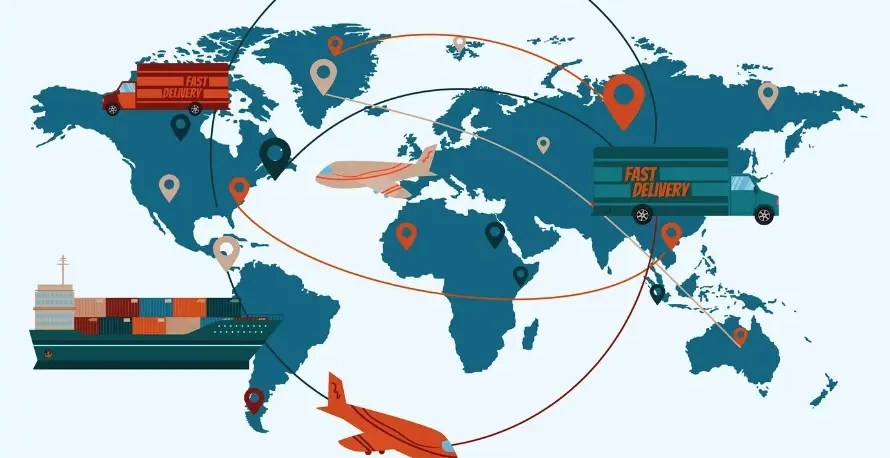
We take global trade as a given nowadays. And yet, despite countless attempts by postcolonial scholars to push the genesis of what can be properly called “global trade” as we know it today as far back in time as possible, the fact remains that regional trade systems by themselves do not translate into a global trade system.
No doubt, much trading took place along the whole stretch of the Indian Ocean for example, going back millennia, but that is still not global trade. Even when we consider the economic activities of that region as having had connections with the Mediterranean and with Rome, that is a far cry from what we consider global trade today.
And while Indian influences changed the face of Chinese culture for over a thousand years since before the advent of the Christian era, most obviously in the philosophical and cultural spread of Buddhism throughout China, and we may assume that economic and trading ties must have occurred alongside that flow of manuscripts and ideas and people, that did not amount to a global trade system.
Global trade occurring with the intensity of the last few hundred years is a new phenomenon. In summing up, that intensity was not merely economic. Far from it. The beginnings of global trade were piratical and military, it was confrontational, aggressive and genocidal, and it was often culturicidal as well. And given the industrial advantage and ideological chauvinism the European colonialists possessed, colonial trade was always economic warfare in essence.
Over time, with full European colonialism in place in most parts of the world, the institutionalization of that aggression began. The conflicts were rationalized, the governance stabilized, the stresses subdued. Ethical principles, such as “The White Man’s Burden”, whitewashed the greed and the crimes.
What we came to call “Soft Power” was fashioned into being. Paradoxically, while racism was normalized, slavery was found an unnecessary transgression.
An Olympian Paradox
The imperialism unleashed on the world by the nation states of Europe following the Westphalian solution and which we came to call the era of global colonialism would become the liberational model for colonized territories to adopt. An Olympian paradox played out on the world stage if ever there was one.
It was as late as in 1793 that Britain’s King George III sent George Macartney to China to persuade the Qianlong Emperor to open up China to trade with Britain. The emperor’s blanket rejection of all their requests tells us that there was as yet no global trade structure in place to speak of. After all, the Manchu empire which did not wish to import from the West was at that time the largest economy in the world, responsible for 30 percent of estimated global GDP.
Add to that the solemn fact that the other major polities in northeastern Asia, like Japan, would remain outside world trade until 1854, and Korea until 1876—the first under American pressure and the latter under Meiji Japanese pressure.
The Qing Empire itself had to open its ports in 1842 after the First Opium War. From then on, its systemic collapse began, and China’s rejuvenation as a major economic power, this time as part of a global trading network would not happen until 200 years after the Qianlong Emperor’s fateful rejection of European imports.
What this tells us about global trade is that it took a painful process of creating and controlling supply chains to come into being. The system established for this was a hegemonic one, prone to open conflict on all fronts. World wars have been the bloody accompaniment to this process.
We see that very clearly today. But that is made sorely apparent through the present speedy loss of control by western powers, especially the USA, over crucial supply chains. These chains are not only about commodities, however. Understanding supply chains to be about commodities alone is what misguides us in understanding the structure of global power. Supreme power, if sustainable, naturally seeks to be holistic. Wherever money is involved, there is a supply chain. This can be in education, in information, in messaging, in payments, in defence, in entertainment, in language use, ad infinitum.
Much to learn from Malayan history
In this epiphanic context, the modern history of Malayan colonial economics, stretching into the national-economy building process of the Malaysian federation, is highly illustrative. The early stages of industrialization in the West saw the British creation of new supply chains which made full use of the resources the Malay peninsula had to offer. This need directed the nature of its colonization. The modern demand for tin and rubber encouraged British colonialism on the peninsula to move from control of harbours to the control of plantations and mines. New supply chains were created over which the colonists exerted as much control as was possible. Overlaying these products as a more powerful illustration of supply chain creation and control, was of course the opium supply chain; this involved further subjugation of India into a producer colony and China as a black market for the product.
Post-independence, Malaysia’s industrialisation has necessarily been about playing minor roles in bigger global supply chains under the control of MNCs of stronger economies. Rising above being a minor player in supply chains has not been part of the country’s nation-building ambitions. In that sense, the country remains limited in its understanding of the imperatives of liberational nation building which mark other Asian examples such as Japan or China, and neighbouring Singapore.
In essence, the world has always had trade wars in modern times. That is one succinct way to define modernity, in fact. This creating of supply chains covering the world is the basis and the determinant of what I would call the Global Trade system within which we now live. Controlling these is what global power is based upon.
The creation of the Petrodollar in 1974 by the USA was a stroke of genius meant to retain control over two vital ends of the global trade structure: Global supply of energy on the one hand, and Global finance on the other. This was indeed a clever damage-control move orchestrated by the global hegemon at a time when its control of supply chains had to be rationalised strategically.
Moving forward, how supply chains for critical materials—from rare earths and oil to information and finance—are to be managed in order for trade wars to be limited and military warfare avoided, will require general understanding and open discussions about the history of global hegemonic practices. If not, we remain victims of the exigencies and foul practices that gave birth to globe-spanning trade.


Discussion
No comments yet.