RETIREMENT, MOBILITY AND INVESTMENT
Malaysia is widely ranked as one of the world’s best places to retire. This may surprise many who read local political news and wonder about its stability. But the truth is that the country is attractive to many people—local and foreign alike—seeking low costs of living, easy travel opportuni-ties, good healthcare and friendly neighbours.
According to HSBC, only Panama and Ecuador are more attractive for retirement than Malaysia. Within Malaysia itself, the bank advertises Penang as the top spot for foreigners wishing to settle, followed by Kuching and Ipoh. Meanwhile, Huffington Post has been telling its readers that: “Tropical Penang […] offers one of the best overseas retirement opportunities in the world.”
But Penang also attracts other types of globally mobile people to its shores. Its universities bustle with foreign students, especially those from South Korea and the People’s Republic of China; its private hospitals nurse foreign patients, particularly from Indonesia; and post-Covid-19 tourist arrivals have soared, exceeding 8.2mil visitors in 2024 (up by 13.3% from the year before).
Not only are foreigners being drawn to Penang for reliable healthcare, better edu-cation and serious cultural excitement (one must never forget the food and the living heritage of George Town and beyond), but foreign money cannot seem to keep away either. In fact, foreign direct investment in manufacturing reached RM15.2bil in 2025, constituting 68% of the RM22.4bil in investments approved that year (which jumped by 29%, up from 2024).
Penang’s international reputation is definitely enviable, and getting better. Geopolitical uncertainties have presum-ably drawn a lot of attention to the state, from all sides of the spectrum. Earlier this year, it was announced that Penang now has 23 honorary consuls, alongside the four established consul-generals from Indonesia, Thailand, China and Japan.
Managing this upsurge in global attention on multiple fronts is quite a challenge, as one can imagine. This is a so-called “good problem”, no doubt, but even a good problem still needs managing. And such management is, most essentially, about the local population.
How is this rise in global attention affecting them? And how well-prepared have the Penang state and the local governments—and not to mention the federal authorities based in the state—been in con-fronting these new times? Can Penang as a whole handle its own success over time?
QUANTIFYING LOCAL SATISFACTION
Getting to the point, how liveable is Penang, where its own population is concerned?
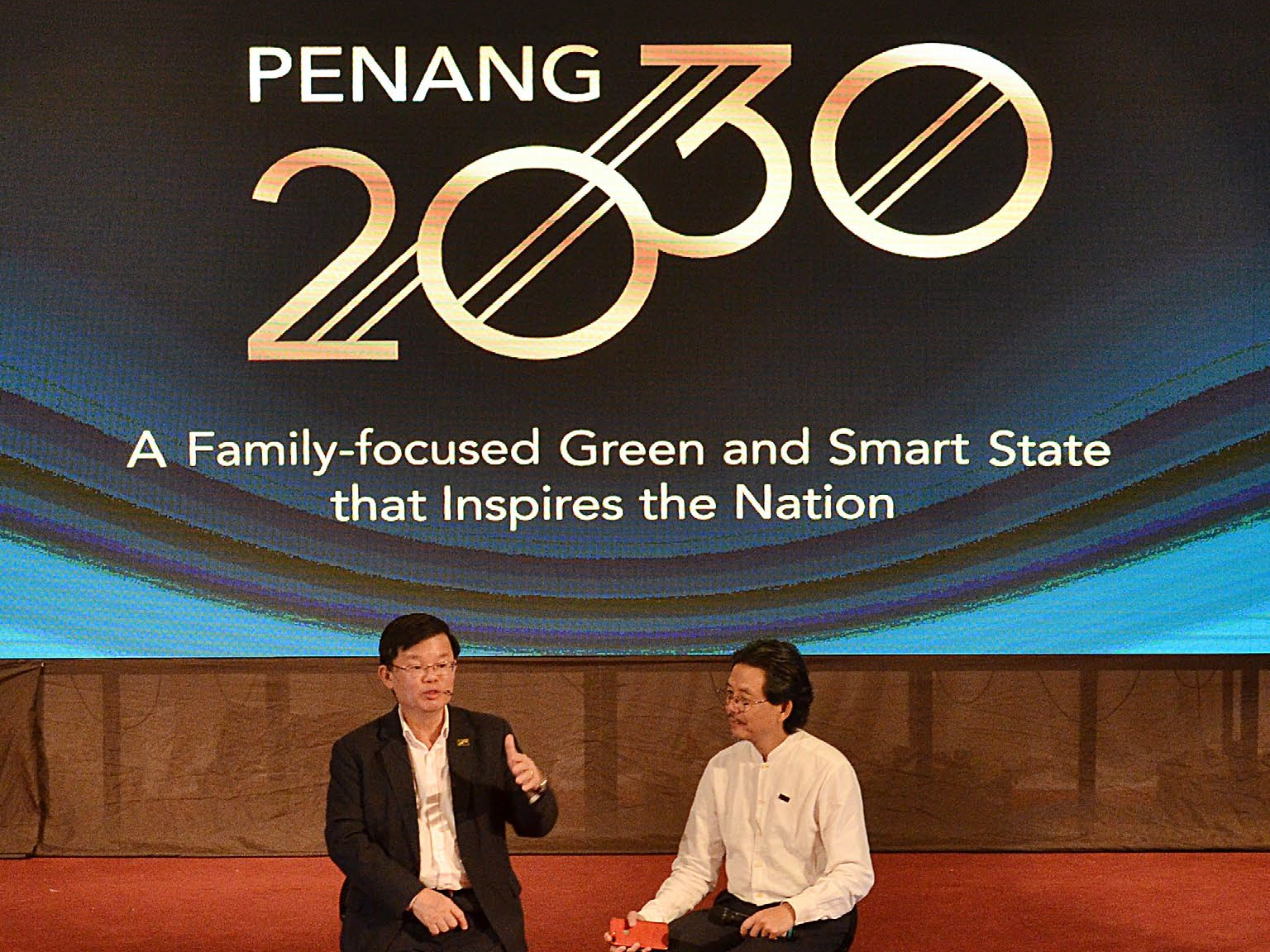
Luckily, there are two ways of approaching this question: the first through proactive policymaking, and the second through measurement. The Penang 2030 Guide, launched in 2018 by Chief Minister Chow Kon Yeow, envisions: “A family-focused green and smart state that inspires the nation.” Much has been discussed about Penang2030 since. But what is significant is that it articulates the general, and necessary, direction of policymaking in the 2020s. As the chief minister phrased it:
[…] the Penang2030 discourse has […] paved the way for an increased sense of common purpose in society as a whole. Busi-nesses are now cognizant of the priorities of the state, and foreign investors have taken notice of the serious intent captured in the documents propounding the Penang2030 vision. […] Liveability has definitely increased over the last decade.
Penang2030 and the policymaking discourse it has implanted into governance has been off to an exemplary start. At the street level, where policies matter the most, the situation seems positive, eight years into its implementation.
As luck would have it, Penang Institute has just completed a survey that was once envisioned in the Penang2030 blueprint. Originally titled the “Happiness in Penang” Index, that serial survey is now retitled the “Penang Satisfaction Survey”. The 2026 version has just been concluded and is being processed for publication.
So, how liveable is Penang to its local population, according to this survey? How satisfied are they with their general situation?
SOME INTERESTING FINDINGS
First off, we see a strong attachment to Penang. As many as 87.6% of respondents are happy staying on in Penang. They score high on “overall life satisfaction”, express “high satisfaction” with health, family and community relationships” and are clearly more positive about their state government than with the federal government. Where “Liveability & Social Wellbeing”, “Economic Wellbeing” and “Freedom & Governance” are concerned, their average scores all fall on the “Satisfied” side.
Worth noting are three interesting findings. The first is that the Indian com-munity shows the largest increase in satis-faction. The second is that those below 24 are the most satisfied age group. Given that Penang has been notorious for its “brain drain” of talented people and students for decades, this finding is highly substantive, speaking volumes about the future of live-ability in Penang. The third is the high level of satisfaction among homemakers and caregivers: they feel sufficiently supported by society and the state in going about their duties and satisfying personal needs. Even those who expressed political dissatisfaction expressed a high intention of staying on in Penang. Only 12.4% of respondents wish to move elsewhere. The rest—87.6%—plan to stay on.
With regard to “Environmental well-being”, however, respondents show notable dissatisfaction. Some relevant issues from this category, and others, include traffic congestion and road conditions, coastal erosion, housing affordability and urban planning as well as financial resilience.
What decision-makers will need to do, going forward, is to take seriously the problematic issues raised in the survey. The three levels of government involved will need to hold more common discussions to improve the delivery of public goods, while the vision for Penang moving into the 2030s should build on what has been achieved in our current decade’s public discourse and policy direction. Serious engagement between the top, middle and bottom layers of society remains key for maintaining and raising liveability in Penang, as it does elsewhere.
New times require not only new thinking, but also new synergies and tactical innovations.
*Note: The Penang Satisfaction Survey 2026 is due to be published in the coming weeks by the Penang Institute.


Discussion
No comments yet.