PENANG PROFILE, Penang Monthly, June 2026
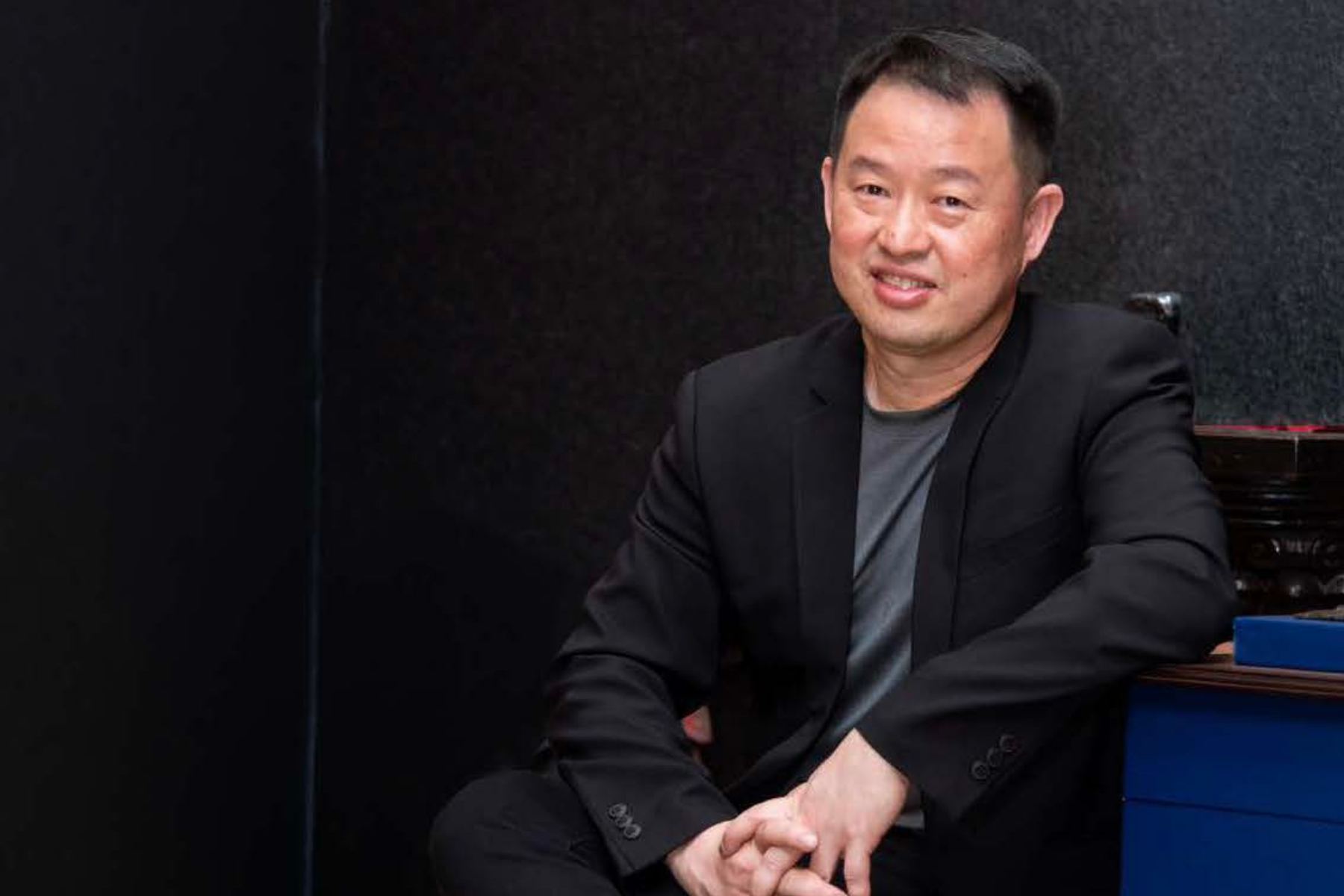
AS USUAL, THIS column highlights an exciting personality from Penang, no doubt because of what they have achieved, but more importantly, to showcase their infectious passion for the state of Penang and their ability to inspire its next generation. I query Ch’ng Huck Theng, a conspicuous artist and businessman, among other roles, on his interests and how he envisions Penang’s role in the 21st century.
Ooi Kee Beng (OKB): Can you tell us about your upbringing as a scion of the Ghee Hiang company? What early lessons did you learn about Penang and its small- and medium-sized enterprise (SME) culture?
Ch’ng Huck Theng (CHT): Everyone is of the opinion that since I am from the Ghee Hiang family, my childhood would have been a pretty rosy time. It was the other way round. My father was probably the “black sheep” of the family. He came back from the University of Tasmania and took up a job as a teacher at Chung Ling Private High School.
Later, he became the Cathay Cinema manager. That meant that I got to watch almost every movie shown, and this is probably why I still enjoy watching movies in cinemas.
He then ventured into a few businesses. These failed, but things went steady for him after a while. Life became better for us when he went into the frozen seafood import/export business in the 1980s.
When my sisters and I were growing up, Ghee Hiang was never in our dictionary and our teachers always thought that my father was a fishmonger in some wet market; we always put down our father’s occupation as “Selling Fish” when filling in school documents. Although my dad was not the favourite son in his family, I was the favourite grandson. Grandfather was very nice to most of his grandchildren: he would take us shopping almost every weekend.
We experienced what it was like growing up in a family of six, with Father as the sole breadwinner, working as a teacher while providing Mother with a regular allowance, Later, I remember feeling happy about Father becoming his own boss: failing at first, but soon becoming successful. I guess what I learnt in my early days, before secondary school, was a journey of survival, hard work, unity—that is probably why we four siblings are very close, even today—and hope, not for the best, but better, and having a practical mindset. You do not necessarily have leverage, even coming from a well-known family. I guess I am blessed to have been able to go through the lows—that taught me how to act correctly towards relatives, my sisters’ families, my children, nephews and nieces.
Then came the second part of my life, when I started collecting antiques at the age of 14. That was when I fell in love with Chinese figurines. Father had bought a set of Hok Lok Siew and a Guang Kong for display at our new home. Their facial expressions were intriguing. I started going around shops and friends’ houses to make comparisons. I was so into it that I went to Jingdezhen to do research on Chinese famille rose figurines. I bought some very nice pieces from the then-government-run Jingdezhen Porcelain Factory, especially treasuring those that I had the opportunity to buy from the record room.
In 1997, I was getting married. But my house, especially my bedroom, was filled with these figurines. I had not much choice but to hold an exhibition. I sold 220 figurines in four days. It was during this time that I became good friends with very respected Penang figures like Dato’ Seri Lim Kean Siew, Asas Dunia, Tony Chan, etc. They taught me lots and had advice like, “You have to have a lot of good friends” or “You have to be knowledgeable to share information”. A few years later, I learned to incorporate aesthetics into information and friendship. This is why I now have a company, CHT Network, which deals with friends; Mar-ketSource, a media company sharing information and news; and One East Museum & Art, which focuses on antique collections and my own artwork. This was what I learned from some of Penang’s respected figures in my 20s.
OKB: Of the positions you hold, which are you most proud of, and which do you find to be highly consequential for your future ambitions and projects?
CHT: When one googles “CHT”, it can get very confusing. You find my name in the seafood industry, also as an artist, sculptor, writer, collector … I started as a manager in a ceramic factory in Chemor, then I was into frozen seafood in Parit Buntar, and Ghee Hiang pastries and sesame oil. On the other hand, you also see media, network and award businesses. Currently, I am chairman of the Association of Tourism Attractions Penang (ATAP), president of the Penang Antique Collectors Association, head of trade & economics at the Penang Chinese Town Hall, advisor to the Penang Art Society and director of the Penang Fujian Merchant Association. I am often asked how I make time for all this. The thing is, I do not see myself as having all these responsibilities; I have only one position, and that is being CHT.
To go back to your question, I am most proud of being myself. I make sure that my family is well taken care of, and not just financially. My children have to know how to fish for themselves: the fish cannot just come from me. Next is to make sure all my businesses have a purpose. Only after taking care of the fundamentals, can we move on to bigger things, like Ghee Hiang going into scientifically backed sesame oil health supplements and the expansion of sesame oil into the international market once our new plant is ready. Meanwhile, CHT Network promotes face-to-face interactions, which is especially important now that AI is replacing most things. I continue researching and writing on antique Chinese famille rose figurines and porcelain. I may have a lot on my plate, but these are things I am passionate about.
I organised Beyond Contemporary Art Penang a few years ago, to explore a new ecosystem where business, art, tourism and education come together. The traditional way of surviving within a single industry is getting harder. Art is an important addition to many industries. Even big names like Rolls Royce, BMW and Cartier are collaborating with the arts. This provides a market for artists. Most importantly, this new ecosystem needs to be part of the education system to groom future supporters and engage the public to create awareness and excitement.
OKB: You are knowledgeable about SME culture in Penang, including its weaknesses and strengths. What would you like to see done to enhance the future and regionalisation of Penang’s SMEs?
CHT: Like what YB Steven Sim (Minister of Entrepreneur Development and Cooperatives) has said, Penang was about survival when it started. That was Penang 1.0. Industrialization with foreign companies investing and having factories producing components for semiconductor production was Penang 2.0. Moving towards Penang 3.0, we need our own brands to expand to new horizons, just like what Ghee Hiang is doing. It is not only the electronics industry which has to move beyond its comfort zone; all other industries have to rethink their future business strategies to stay relevant.
From what I see, the current world crisis is a blessing for Malaysia. Most regions are in crisis, including the US and Europe. The best bet for the next five to ten years is Southeast Asia. Malaysia is probably the best and safest option for foreign investors right now. It is still affordable, has no real language barriers or major natural disasters, and has low crime rates. It is time for politicians and the people to understand how lucky we are and seize the moment. What we need are smart, educated politicians, who act like business people, to run the country as effectively as possible—like our parents would—and whose key performance indicators (KPIs) are about putting bread and butter on the tables of all Malaysians.
OKB: Regarding CHT Network, can you tell us how it came into being, and how you see this network aiding Penang’s development regionally?
CHT: CHT Network was founded about 20 years ago, guided by the principles of sincerity, integrity and fairness. Most will understand the first two, but most people take fairness for granted. We want to win in business deals, but we must always make sure those collaborating with us also win. A one-sided business will never last. In life, we hope to have good and sustainable business associates and supporters.
OKB: Any advice for Gen Zs and the younger generations?
CHT: We must accept the fact that the world is changing, with AI and robotics taking over a lot of fields. For Gen Z, especially, they have to work out their future and craft a suitable direction. If not, more chaos awaits them. But the fundamental approach remains the same; treat people with love, protect your family before trying to save others, respect and treat others fairly. Business is all about supply, demand and product. This is a simple equation passed down for generations, and we need not complicate the balance. We just need to work on the variables. This advice applies as much to the rest of us.
OKB: Regarding art and entrepreneurship, what is needed for Penang’s creative sector to thrive?
CHT: I was the youngest person to serve on the board of directors of Balai Seni Negara many years ago. I orchestrated the decision of the [Ministry of Investment, Trade and Industry] to accept art under its portfolio, so that Malaysian art could expand its market overseas. If we need Malaysian art to be accepted by foreign collectors, then we need to treat it like a business. The supply, demand and product equation has to be in place to bring Malaysian art to the world. Artists on their own cannot go far. This applies to Penang too. If Penang wants art to thrive, then the state must play the role of promoter and incentivise those in the art business, not just by giving money but also working on KPIs. The state needs a strong and effective committee to advise it and achieve results. Talk alone without effective action is cheap.
OKB: Regarding the rise of China, how can Penang’s businesses make use of this trend?
CHT: China is a force that we all have to accept and work with. The awakening of this sleeping giant a few decades ago was all about supplying cheap labour, low production costs and mass production. Now that its economy has matured, it needs to expand and reach for a larger slice of the overseas market. We, as a small state, cannot go head-to-head with a giant. We must find ways to collaborate and find win-win solutions. We can still leverage their domestic market; many Chinese living in China still opine that foreign brands are more reliable. Hence, we can still work with Chinese importers and sellers to expand our market in China. On the other hand, we can help the Chinese sell products here, not merely as competition but as simply another choice for consumers. We just have to have the right product positioning for the right market.
Furthermore, we have to make Penang the place for Chinese to visit, stay, invest, seek medical attention and have an education. Tourism, the Malaysia My Second Home (MM2H) programme, medicine and education are important contributions to Penang’s economy outside of the industrial sectors. Services and hospitality are always seen as players contributing to an island economy, just like in Hong Kong and Singapore. Now, we need to show foreigners that Penang is politically stable and that its services are of quality and given with a smile.
OKB: What other insights do you wish to share on where you see Penang going? What innovations in our political economy are needed?
CHT: We celebrate Chinese New Year, Hari Raya Aidil-fitri, Deepavali, Christmas, Wesak, Hari Raya Haji, Awal Muharram … all these holidays. Malaysia is truly a unique country for the rest of the world to learn from. We can be the example of what living together is all about. What we need now is to have a better understanding of how to run the country together peacefully, working towards a better economy, safer society and harmonious environment. We need politicians who put the people first, and to replace those using race and religion to incite hatred for personal agendas. The world is in a bad enough situation as it is. If we cannot keep our own house together, we will move backwards and risk all that our forefathers fought for.


Discussion
No comments yet.