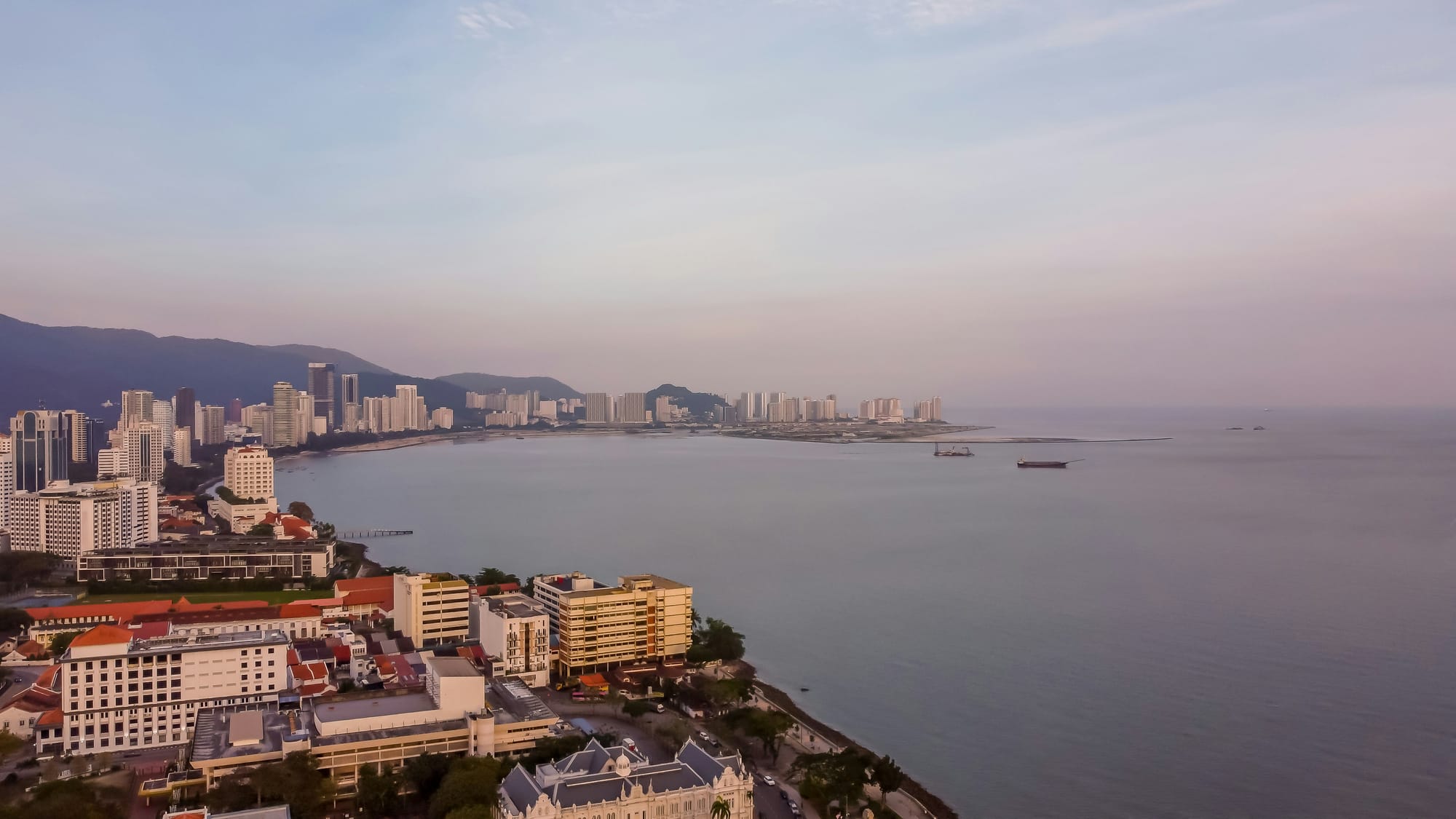
PENANG IS FULL of inhabitants who were not born here. In fact, there is some oft-repeated “test” to decide if someone not born on the island is truly a Penangite or not. So far can the triviality over identity go.
On a good day, I think of Penang as an inclusive, if ironic, entity, having a bit of everything. It has hill and sea, east and west, old and new. It is provincial yet cosmopolitan, a cultural hub yet national fringe, industrialised yet relying greatly on small family businesses (some of which have since become heritage brands explored in this issue). It has a relatively small population, but also a reputation for bad traffic jams. It attracts people from all parts of the world, yet is notorious for its brain drain of talent to foreign lands.
On a bad day, I think of Penang as being neither here nor there, neither this nor that. This could mean a fragile identity and weak self-understanding, or even a lack of vision and passion. But if that means that it is in a constant state of becoming, of transformation, of indefinability, then it is a good sign. It is adaptive and undefinable because it does not fear change.
We also hear how Penang—and Malaysia, for that matter—is full of potential. This is a back-handed compliment. Does it mean that Penang always underperforms, or that it does not control its own fate? “Penang can be improved, and easily!” is the general public conviction, and its political leaders should remain cognisant of this sentiment if they want to win votes.
Penang can be thought of as both island and mainland, port and settlement, sea and land. It is recognised by UNESCO for having a city with a famous entrepreneurial past as well as rich natural biodiversity.
But I would simply say that identity is ultimately a subjective matter. You are a Penangite if you think you are attached enough to belong to the place. No bureaucrat—or fellow Penangite, for that matter—can tell you that you are not a Penangite if you feel for the place, if you wish for more realisation of its potential, if you have joyfully experienced how welcoming it is of alien things, if you have seen how independent its inhabitants naturally are. How practical, how inclusive, how resilient. What matters, therefore, is your own sense of psychological ownership.
Penang is small enough, comprehensible enough, cultured enough, progressive enough, educated enough and worldly-wise enough for its inhabitants and long-term visitors to not only wish it well, but to care and own it enough, to suffer its lack of perfection. And moan over it. When you feel that deeply, then you have become a Penangite. Your suggestions might not be practical, but that should not stop you from suggesting solutions for Penang’s lack of perfection.
This philosophical, psychological and personal sense of ownership is an interesting phenomenon. It is a claim of cultural ownership: a strong sense of agency, proactivity and responsibility for the place. It means unease over the practically criminal fact that Penang is not yet a better place than it is now. Such a crime may be committed by neglect, incompetence or a lack of care or vision, or even maliciously: driven perhaps by essentialist contestations over identity.
What makes a person a Penangite is not a question of one’s place of birth or residence, or how much of an economic stake they have in the state—that is, material ownership—but is instead heavily tied to this psychological sense of ownership: whether they care about the place or not.
Caring about Penang, in turn, means that one has deeply felt its uniqueness, which consequently leads to an understanding of the existential dangers and cultural pressures that Penang always confronts. Knowing Penang’s innate and fragile qualities also means being cognisant of where such threats come from, whether internal or external.
Penang’s identity is not a domestic matter alone. If anything, Penang is international. It belongs to the world, a rare (generally) positive leftover of colonialism and globalism, of the 20th-century fall of empires, of the sufferings of starving millions, of ideological battles fought on lands and seas.
Something good, some deep humanitarian logic, has had to come out of all that bad stuff. To a pertinent extent, that something is little Penang. Anarchistic and chaotic, yet welcoming and resilient. If you own that sense, if you feel that in your gut about Penang, then you are a Penangite.

 Wikibeng
Discussion
No comments yet.