By Ooi Kee Beng, Penang Monthly editorial November 2026
ONE OF THE deepest legacies of colonisation worldwide is the nation-state. Having learned that every inch on earth has to be owned, sooner or later, by some political power, the emergent nation-states, which inherited the territories left behind by crumbling European powers—and Japan—in the 20th century, also cultivated the envy, desperation and fear that had characterised their European models.
National borders became frontlines where flows of goods and peoples could be controlled, counted and tariffed. Other frontlines grew to monitor the flow of capital. This innovation in human organisation meant the erasure of earlier types of flows. But where maritime migration and trade patterns were historically important, things can get very messy, and their consequences hard to chart. And when subsequent settle-ments occur, things get really exciting.
Such spots are a paradise for anthropologists. The intermixing of communities and cultures, coupled with the growth of new trades, professions, cuisines and identities, promises insights into human behaviour in ways that studying a stable society cannot offer. Strangely though, when communities mix, they also become extremely fearful of cultural loss, or what I shall call the chauvinism paradox. This most likely occurs when the communities involved came from faraway places with differing civilisational impulses. Thus, one can expect radical differences in terms of how communities with differing languages, histories and values subsequently get along amidst greater cultural proximity.
This is the case for Penang. While characterised by their high level of tolerance and curiosity, Penang’s constituent communities—which, importantly, are not equally balanced in terms of population size, economic coherence or political prowess—are quite defensive and instinctively proud of their respective ethnic backgrounds.
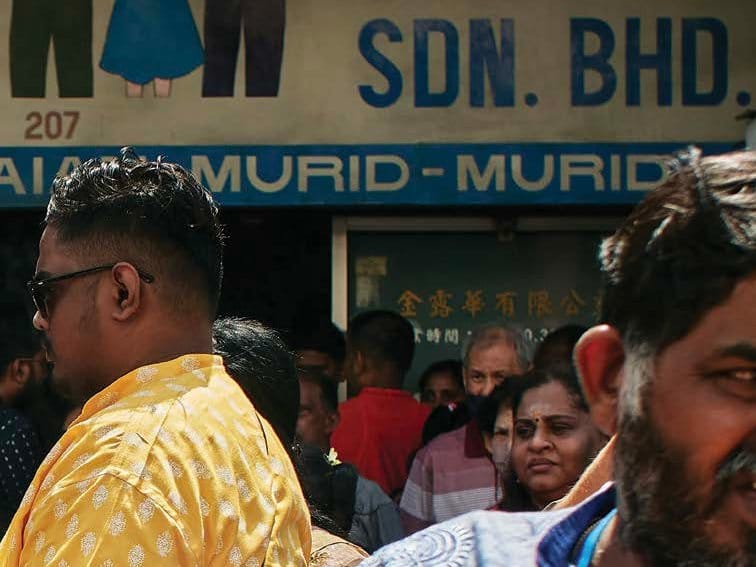
Economic interdependence seems to be the grease enabling communities to come together. At the same time, they feel a need to distinguish themselves from each other, though seldom aggressively. They occasionally megaphone their distinct nature, in accordance with cus-toms developed and maintained over time, largely for this very purpose. There is also a spatial consideration. While we may see places of worship located alongside each other in apparent harmony, we also have urban enclaves that are clearly based on one dominant ethnic component, be this George Town’s “Little India,” a clan territory or an urban Malay kampung. An apartness remains.
Such limited territorial overlaps are just as informative about history and human behaviour as Penang’s more hybrid core areas. The overlaps in economic activities, the fusion in food and the creolisation of languages need to be appreciated in con-junction with distinct cultural celebrations, religious festivals and physical spaces. A cosmopolitan hub’s stability and liveability are premised upon the seemingly con-tradictory principles of hybridisation and plurality. In fact, the latter process enables the former to persist peacefully. The resulting “chauvinism paradox” may be the pre-requisite for intercommunal collaboration and acceptance.
Penang was a fringe territory of the Kedah Sultanate, for which Siamese power had been a major concern for several centuries. The formal population of Penang, gauging by colonial standards of legibility, began with the British attempt to secure a maritime, mercantile and military base on the eastern side of the Bay of Bengal in the late 1700s. This led peoples of various ethnic backgrounds, who were already settled in the immediate region, to move to the new free port to test their luck and seek safe haven. Once confidently settled, the British encouraged migration from India and China, where very distinct and disparate peoples began establishing themselves locally. Such is the formal historical narrative. But it is also an incomplete one.
South Asian migration, settlement and influence precede the appearance of any European ship in this region, signified by references to and signs of Tamil crafts-men and traders, merchants and mariners, and Brahmins and Buddhist monks dating back several hundred years before the Christian era. This is not to mention the arrival of Chola forces in the 11th century. In 1786–1957, as many as four million people of South Asian origin crossed over to Penang, although only about a quarter settled for good. They came as soldiers and armed police, as convicts from the Madras and Bengal Presidencies, and as estate and public works labourers. Alongside them were free migrants who dealt in finance, trade, clerical and technical work.
Where the Chinese are concerned, there are records of ships and pilgrims vis-iting Langkasuka and Srivijaya before the Tang Dynasty, and some were also resi-dent in Temasek. 15th-century Melaka was used as a staging post for Chinese voyages, and the Sultanate enjoyed Ming protection (at least under the Yongle Emperor). Where Penang is concerned, small populations of Chinese had settled, especially on the northern Tanjung Tokong coast. British rule encouraged Chinese already in the region—at Melaka, Phuket and Kuala Kedah—to relocate, with their population reaching around 3,000 soon after. By the end of the Second World War, 250,000 Chi-nese had settled in the colony (55% of the total population).
Early Malay settlements on the island would probably have been on the coasts, most notably in Batu Uban. Later settlers in colonial Penang were a diverse group, including Kedah Malays, Sumatrans, those of Arab descent (such as the Arab-Acehnese), Bugis, Javanese, Boyanese and the creole Jawi Peranakan population. Much of the Malay settlement of Seberang Perai (formerly Province Wellesley) was driven by refugee streams from Kedah, whose peoples fled the 1821 Siamese invasion and later suppressions.
Beyond these three major communi-ties are many others. But it is sufficient to note that their stories already complicate the straightforward historical narrative of European agency, which foregrounds a Eurocentric understanding of the region’s geography—and, by extension, Western discursive hegemony—and effectively erases non-European contributions. Local agency, in the final analysis, needs to be remembered and valued if we are to step beyond the curtain of colonial historiography. Regaining knowledge about the phases of—and reasons for—the migrations of Penang’s early population will help us understand our own home, its historical and geographical significance and its future possibilities. And embrace our own historical agency.


Discussion
No comments yet.